The Vanishing Footprints: How Tracking Dogs Are Preserving the Last Traces of Endangered Species
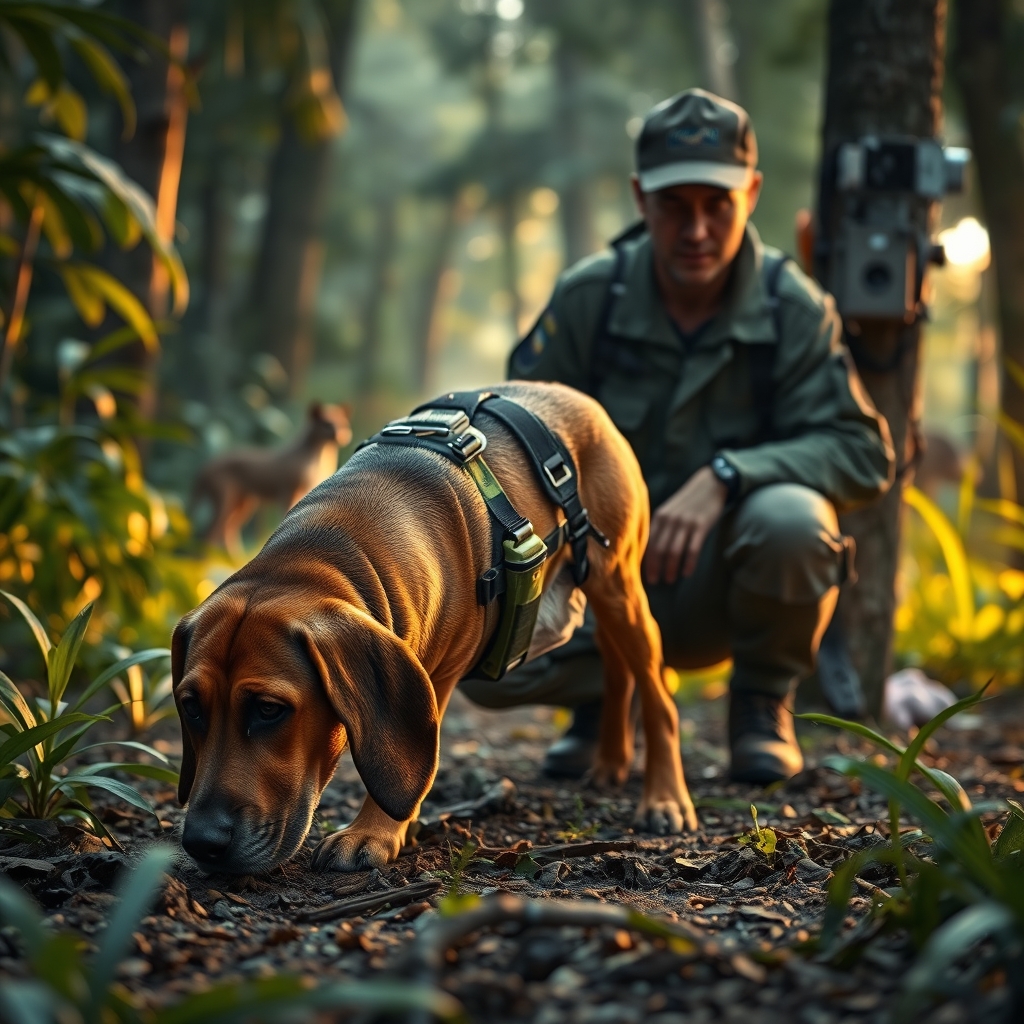
The dense undergrowth of the rainforest parts reluctantly, as if resisting the intrusion of the outside world. The air is thick with the scent of damp earth, decaying leaves, and the faintest hint of something else—something wild, elusive, and on the brink of disappearance. A rustle in the distance sends a shiver through the foliage, but the source remains hidden, a ghost in the green. Then, a low whine cuts through the silence, followed by the soft padding of paws. A tracking dog, its nose pressed to the ground, moves with purpose, unraveling the invisible threads of a story written in scent.
The Nose That Knows No Borders
Tracking dogs, particularly breeds like Bloodhounds, Belgian Malinois, and German Shepherds, possess an olfactory prowess that borders on the supernatural. Their noses are finely tuned instruments, capable of detecting scents at concentrations as low as one part per trillion. To put that into perspective, if a human could smell a single drop of blood in an Olympic-sized swimming pool, a tracking dog could detect that same drop in a body of water twenty times larger. This extraordinary ability makes them indispensable in the fight to protect endangered species, where the stakes are as high as the animals they seek are rare.
In the vast, untamed landscapes where these species roam, traditional methods of monitoring—such as camera traps or human trackers—often fall short. Camera traps are limited by their fixed positions, and human trackers, no matter how skilled, cannot match the consistency or precision of a dog’s nose. Tracking dogs, however, can cover vast distances, follow trails that are days old, and distinguish between the scents of individual animals, even in areas teeming with wildlife. They are the living, breathing bridges between the seen and the unseen, the known and the mysterious.
The Guardians of the Fragile
For endangered species like the Amur leopard, the Javan rhinoceros, or the Sumatran tiger, every footprint, every scrap of fur, and every lingering scent is a precious clue in the race against extinction. Tracking dogs are deployed in some of the most remote and challenging environments on Earth, from the snow-laden forests of Russia to the sweltering jungles of Southeast Asia. Their work is not just about locating these animals; it’s about gathering data that can inform conservation strategies, track poaching activity, and even reunite lost individuals with their habitats.
One of the most remarkable applications of tracking dogs in wildlife conservation is their role in anti-poaching efforts. Poachers often leave behind traces of their presence—discarded clothing, spent ammunition, or the scent of their camps. Dogs trained to detect these signs can lead rangers to poachers’ hideouts, uncovering illegal operations before they claim another life. In some cases, these dogs have even been trained to sniff out ivory, rhino horn, and other contraband, intercepting smuggled goods before they reach the black market. Their work is dangerous, often performed under the cover of darkness, but it is also profoundly impactful, saving lives one scent at a time.
The Science Behind the Sniff
The training of a tracking dog is a meticulous process, blending instinct with science. Puppies as young as eight weeks old begin their journey, learning to associate specific scents with rewards. For wildlife conservation, these scents might include the fur of a target species, scat samples, or even the scent of poachers’ equipment. Over time, the dogs are exposed to increasingly complex environments, honing their ability to distinguish between the myriad smells of the wild. Positive reinforcement—whether through treats, toys, or praise—is key, as it strengthens the bond between handler and dog, ensuring a partnership built on trust and mutual respect.
Advancements in animal tracking technology have further amplified the capabilities of these canine conservationists. GPS collars, drones, and thermal imaging cameras are often used in conjunction with tracking dogs, creating a multi-layered approach to wildlife monitoring. For example, a dog might pick up the scent of an endangered pangolin in a dense forest, while a drone equipped with a thermal camera can confirm its location from above. This synergy between instinct and innovation is redefining the boundaries of what is possible in wildlife conservation.
The Unseen Struggles
Yet, the life of a tracking dog is not without its challenges. The environments they work in are often harsh and unforgiving, from the scorching heat of the African savannah to the bone-chilling cold of the Arctic tundra. Injuries are common, whether from rough terrain, encounters with wildlife, or the physical demands of the job. Moreover, the emotional toll of their work can be significant. Dogs are deeply intuitive creatures, and the stress of their handlers, the urgency of their missions, and the often grim realities of poaching and habitat destruction can weigh heavily on them.
Handlers play a crucial role in mitigating these challenges, ensuring their dogs receive proper care, rest, and mental stimulation. Regular health check-ups, balanced diets, and downtime in safe, enriching environments are essential to keeping these dogs at the top of their game. After all, a tracking dog is only as effective as its well-being allows, and the bond between handler and dog is the foundation upon which their success is built.
The Ripple Effect of a Single Scent
The impact of tracking dogs extends far beyond the individual animals they help protect. By gathering data on endangered species, they contribute to a broader understanding of wildlife populations, migration patterns, and habitat use. This information is invaluable to conservationists, policymakers, and researchers, shaping strategies that can mean the difference between survival and extinction. For example, tracking dogs have been instrumental in identifying critical corridors for species like elephants and tigers, ensuring that these pathways remain protected from human encroachment.
In some cases, the work of tracking dogs has even led to the rediscovery of species thought to be extinct. The story of the ivory-billed woodpecker, a bird long believed to have vanished from the wild, is a testament to the power of persistence—and the keen nose of a tracking dog. In 2004, a team of researchers, accompanied by a specially trained dog, picked up the scent of the elusive bird in the swamps of Arkansas. Though the sightings remain controversial, the possibility that the ivory-billed woodpecker still exists is a beacon of hope for conservationists worldwide.
The wilderness is a tapestry of stories, each thread woven from the lives of the creatures that call it home. Tracking dogs, with their unparalleled ability to read the language of scent, are the storytellers of the wild, preserving the narratives of those who cannot speak for themselves. Their work is a reminder that conservation is not just about saving species; it’s about honoring the intricate, invisible connections that bind us to the natural world. In the quiet rustle of leaves, the distant call of a bird, or the faintest whisper of a scent on the wind, they hear the echoes of a world worth fighting for—and they answer the call, one paw print at a time.