The Hidden Hunters: How Tracking Dogs Are Preserving the Legacy of Apex Predators
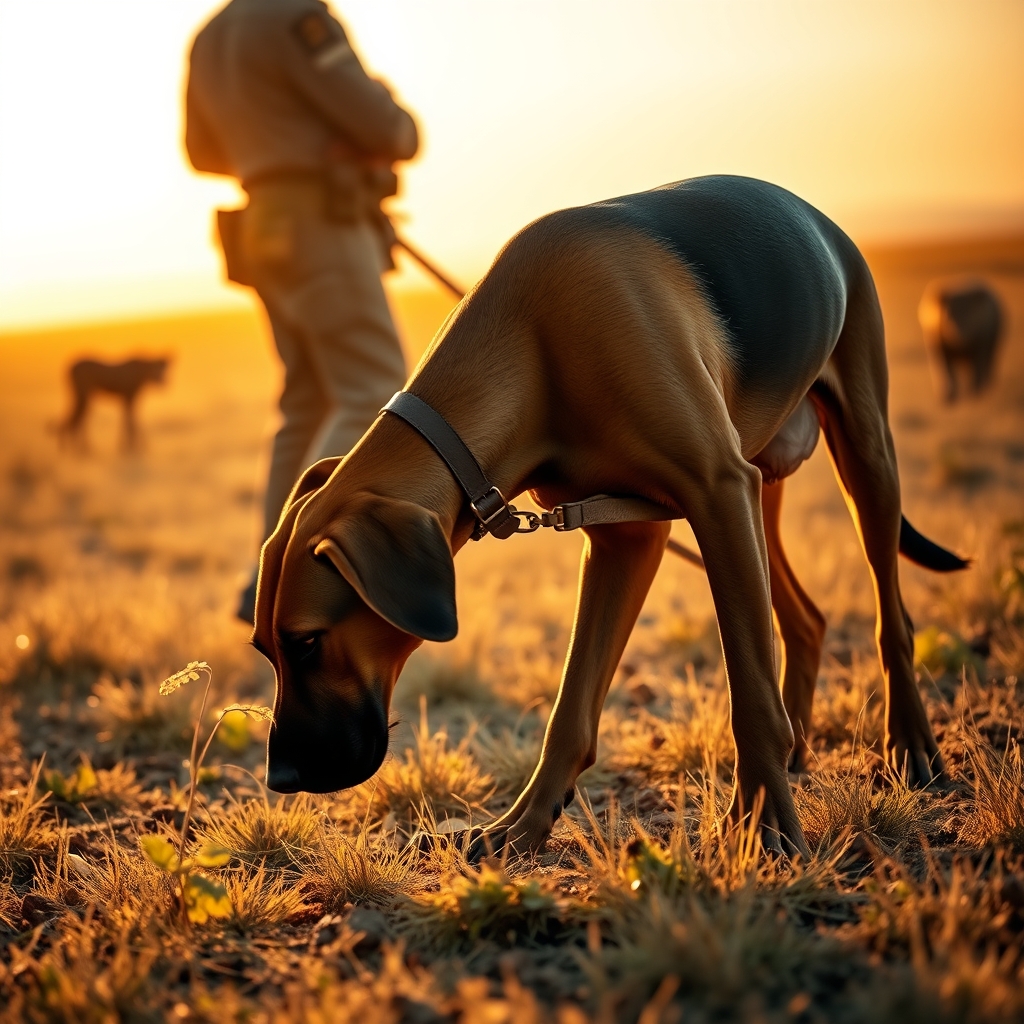
The golden savannah stretches endlessly under the African sun, a tapestry of tall grasses swaying gently in the breeze. Amidst this sea of amber, a pair of keen eyes scans the horizon, not for prey, but for something far more elusive—the faintest whisper of a scent carried on the wind. This is not the gaze of a lion or a cheetah, but of a tracking dog, a silent partner in an ancient dance between predator and protector. These remarkable canines, with their extraordinary olfactory abilities, are becoming the unsung guardians of some of the world’s most majestic and endangered apex predators.
The Nose That Knows No Bounds
Tracking dogs, particularly breeds like the Bloodhound, Belgian Malinois, and German Shepherd, possess a sense of smell that borders on the supernatural. While humans have roughly 5 million scent receptors in their noses, a Bloodhound boasts an astonishing 300 million. This biological marvel allows them to detect scents that are days, even weeks old, and follow trails across vast and challenging terrains. In the realm of wildlife conservation, this ability is nothing short of revolutionary.
Imagine a scenario in the dense forests of the Congo, where the critically endangered okapi—a relative of the giraffe—roams in secrecy. Poachers have left behind traces of their illegal activities, but the evidence is nearly invisible to the human eye. Enter a tracking dog, nose to the ground, weaving through the undergrowth with unwavering focus. Within minutes, the dog has picked up the scent of gunpowder, human sweat, and the faintest hint of okapi fur. The trail leads conservationists directly to the poachers’ camp, where they can intervene before another life is lost. This is not a scene from a nature documentary; it is a real-life operation where tracking dogs are the linchpin in the fight against wildlife crime.
From the Wild to the Lab: The Science of Scent
The work of tracking dogs extends far beyond the field. In laboratories and research facilities, these dogs are helping scientists unravel the complex behaviors of apex predators. For instance, in the snow-covered expanses of Canada, wolves leave behind a mosaic of scents as they traverse their territories. By training dogs to identify and follow these scent trails, researchers can map the movement patterns of wolf packs, understand their social structures, and even predict potential human-wildlife conflicts before they escalate.
One groundbreaking study in Yellowstone National Park utilized tracking dogs to monitor the reintroduction of gray wolves. The dogs were trained to distinguish between the scents of different wolf packs, allowing researchers to track their movements without the need for invasive collaring or tagging. The data collected provided invaluable insights into how wolves interact with their environment, how they compete with other predators like bears and cougars, and how their presence can restore balance to ecosystems that have been disrupted by human activity.
The Bond That Binds
At the heart of every successful tracking operation is the unbreakable bond between dog and handler. This relationship is built on trust, communication, and an almost telepathic understanding. Handlers spend years training their dogs, learning to interpret the subtlest shifts in body language—a twitch of the ear, a change in tail position, the intensity of a bark. In return, the dogs learn to trust their handlers implicitly, following their cues even in the most dangerous or unpredictable situations.
Take, for example, the story of K9 Max, a Belgian Malinois who worked alongside rangers in South Africa’s Kruger National Park. Max and his handler, Thabo, were tasked with tracking a group of poachers who had killed a rhino for its horn. The poachers were armed and dangerous, and the terrain was treacherous, filled with hidden pits and dense thickets. Yet, Max never wavered. He followed the scent trail for over 12 miles, leading Thabo and his team directly to the poachers’ hideout. Thanks to Max’s determination, the poachers were apprehended, and the remaining rhinos in the area were given a fighting chance at survival.
The Future of Conservation: A Symphony of Scent and Technology
As the challenges facing wildlife conservation grow increasingly complex, so too must the tools we use to address them. Tracking dogs are now being integrated with cutting-edge technology to create a powerful synergy between tradition and innovation. Drones equipped with thermal imaging cameras work alongside tracking dogs to locate animals in vast, inaccessible landscapes. GPS collars on the dogs allow handlers to monitor their movements in real-time, ensuring their safety while maximizing their efficiency. Even artificial intelligence is being harnessed to analyze the vast amounts of data collected by tracking dogs, helping scientists predict poaching hotspots and identify critical habitats for endangered species.
In the Peruvian Amazon, a project called “Canines for Conservation” is using tracking dogs to combat illegal logging and mining. The dogs are trained to detect the scent of specific tree species targeted by loggers, as well as the chemicals used in illegal gold mining. By combining the dogs’ scent-tracking abilities with satellite imagery and drone surveillance, the project has been able to identify and dismantle numerous illegal operations, protecting not only the trees but the countless species that call the Amazon home.
The Ethical Dilemma: Balancing Conservation and Compassion
While the contributions of tracking dogs to wildlife conservation are undeniable, their use is not without ethical considerations. Critics argue that the intense training and high-stakes environments in which these dogs operate can take a toll on their physical and mental well-being. Handlers and conservationists must strike a delicate balance between leveraging the dogs’ incredible abilities and ensuring their welfare. This means providing them with proper rest, medical care, and enrichment activities, as well as recognizing when a dog is no longer suited for fieldwork and transitioning them to a well-deserved retirement.
Organizations like the African Wildlife Foundation and the World Wildlife Fund have implemented strict guidelines for the use of tracking dogs in conservation efforts. These guidelines include regular health check-ups, limits on working hours, and mandatory rest periods. Additionally, many handlers adopt their dogs after they retire, ensuring they spend their golden years in comfort and love. After all, these dogs are not just tools; they are partners, friends, and heroes in their own right.
The sun dips below the horizon, casting long shadows across the savannah. The tracking dog, now resting beside its handler, lets out a contented sigh, its work for the day done. In the distance, the roar of a lion echoes through the night, a reminder of the wild beauty that still exists in the world. These dogs, with their unwavering dedication and extraordinary abilities, are not just preserving the legacy of apex predators; they are ensuring that future generations will continue to hear the whispers of the wild, long after the sun has set.