The Invisible Bond: How Tracking Dogs Reveal the Secret Lives of Endangered Species
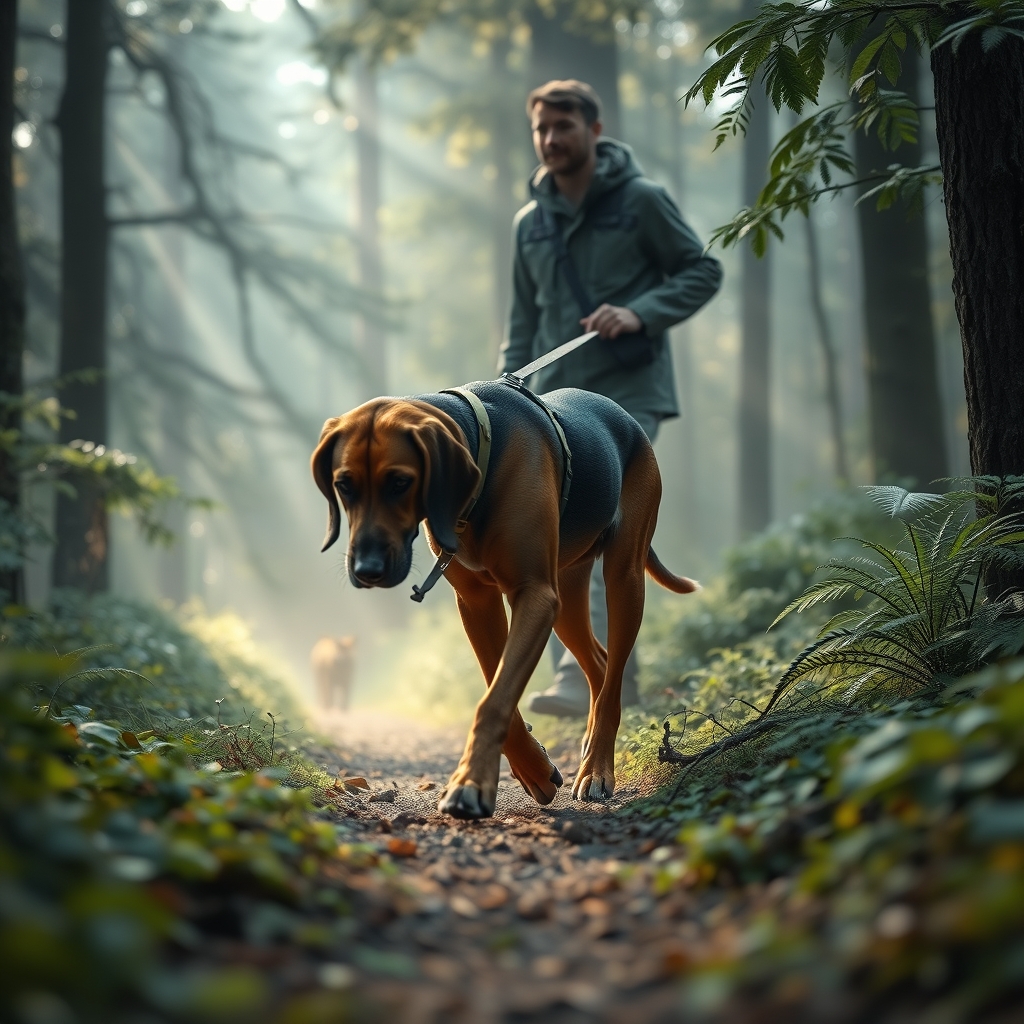
The morning mist clings to the dense undergrowth of the forest, a silent veil that softens the edges of the world. Somewhere within this green labyrinth, an endangered Amur leopard moves with the quiet precision of a shadow, its paws barely disturbing the dew-kissed leaves. To the untrained eye, the forest appears still, an unbroken tapestry of life and decay. But to the tracking dog at the end of the leash, the air is alive with stories—each scent a thread in the intricate web of the wild.
The Nose That Knows No Bounds
Tracking dogs, particularly breeds like the Bloodhound, Belgian Malinois, and German Shepherd, possess olfactory abilities that border on the supernatural. A human’s sense of smell is a mere whisper compared to the symphony these dogs experience. With up to 300 million scent receptors—compared to our paltry 6 million—they can detect a single molecule of odor in a trillion. This extraordinary capability transforms them into living, breathing instruments of discovery, capable of uncovering the hidden lives of species that have eluded human observation for centuries.
In the realm of wildlife conservation, these dogs are more than just tools; they are partners in a delicate dance with nature. Their work begins where human senses fail. Whether it’s tracking the elusive footsteps of a Sumatran rhino through the dense jungles of Indonesia or detecting the faintest traces of a pangolin’s scales in the African savannah, these dogs bridge the gap between what we know and what we desperately need to understand.
Guardians of the Fragile
Endangered species often exist on the knife’s edge of survival, their populations dwindling due to habitat loss, poaching, and climate change. For conservationists, the challenge is twofold: locating these animals and understanding their behaviors without causing further disturbance. This is where tracking dogs become indispensable. Their non-invasive approach allows researchers to gather critical data without altering the natural behaviors of the species they study.
Take, for example, the work being done in the Pacific Northwest to monitor the elusive wolverine. These solitary creatures roam vast territories, making them nearly impossible to track through traditional means. Enter the tracking dog, whose nose can pick up the scent of a wolverine’s marking from miles away. By following these scent trails, researchers can map the animal’s movements, identify critical habitats, and even locate dens where cubs are raised. The information gathered is invaluable, offering a lifeline to a species teetering on the brink of local extinction.
The Technology Behind the Nose
While the dog’s nose is the primary tool, modern technology has amplified its reach. GPS collars, drones, and thermal imaging cameras work in tandem with tracking dogs to create a comprehensive picture of wildlife movements. In some cases, dogs are trained to detect specific scents, such as the presence of illegal snares or the droppings of endangered species. Their findings are then analyzed in labs, where DNA and other biomarkers reveal insights into diet, health, and genetic diversity.
One groundbreaking project in Kenya uses tracking dogs to locate the scat of Grevy’s zebras, a species whose population has plummeted by over 50% in the last three decades. The dogs are trained to ignore the scents of other animals, focusing solely on the zebra’s unique odor. Once located, the scat is collected and analyzed, providing researchers with data on stress levels, reproductive health, and even the presence of diseases. This information is crucial for developing conservation strategies that address the specific needs of the species.
The Human-Canine Partnership
The bond between a tracking dog and its handler is one of mutual trust and respect. These dogs are not mere working animals; they are companions, confidants, and often, lifesavers. The training process is rigorous, requiring patience, consistency, and an understanding of the dog’s natural instincts. Handlers must learn to read their dog’s body language, interpreting subtle cues that indicate the presence of a scent or the direction of a trail. In return, the dogs learn to trust their handlers implicitly, following commands even in the most challenging environments.
This partnership is perhaps most evident in the field of anti-poaching. In reserves across Africa and Asia, tracking dogs are deployed to detect the scent of firearms, ammunition, and even the faintest traces of ivory or rhino horn. Their work has led to the arrest of countless poachers and the dismantling of illegal wildlife trafficking networks. But beyond the statistics, there is a deeper story—one of hope. These dogs are not just protecting animals; they are preserving the delicate balance of ecosystems that sustain all life on Earth.
The Ethical Dimension
As with any tool, the use of tracking dogs in wildlife conservation raises ethical questions. Critics argue that the presence of dogs, even well-trained ones, can stress wildlife and disrupt natural behaviors. Proponents counter that the benefits far outweigh the risks, particularly when the alternative is the extinction of a species. The key lies in responsible training and deployment. Dogs must be conditioned to work at a distance, minimizing their impact on the animals they track. Handlers must also adhere to strict ethical guidelines, ensuring that the welfare of both the dogs and the wildlife is prioritized.
In the end, the use of tracking dogs is a testament to humanity’s ingenuity and our deepening understanding of the natural world. These dogs are not just sniffing out scents; they are uncovering truths, revealing the hidden connections that bind us to the wild. Their work reminds us that conservation is not just about saving species; it’s about preserving the intricate tapestry of life that sustains us all.
The forest is still, the mist beginning to lift as the sun climbs higher in the sky. Somewhere in the distance, a tracking dog lifts its head, nostrils flaring as it catches a scent on the wind. The handler watches, knowing that with every step, they are unraveling another thread of the wild’s great mystery. In this quiet moment, the bond between human and dog, between civilization and wilderness, feels unbreakable—a fragile yet enduring promise to protect the secrets of the natural world for generations to come.