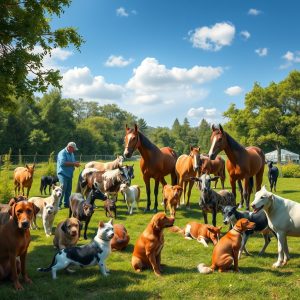
Invisible Trails: The Science and Soul Behind Tracking Dogs in Wildlife Conservation
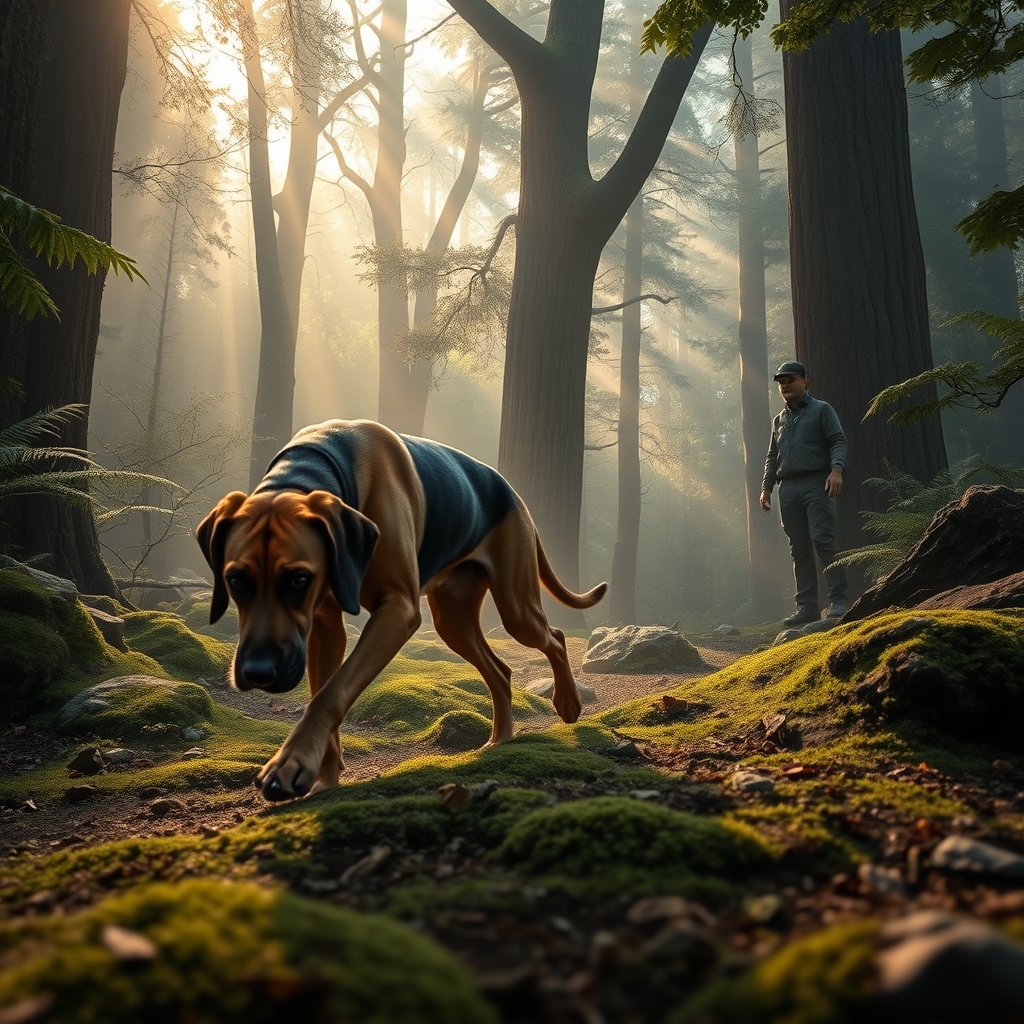
The morning mist clings to the dense undergrowth of the forest, a silent veil that softens the edges of the world. Here, where the air is thick with the scent of damp earth and pine, a different kind of hunter moves—one that doesn’t rely on stealth or speed, but on an ancient, almost mystical ability to decipher the invisible. The tracking dog, with its nose pressed close to the ground, is a living compass, guided by the faintest whispers of scent left behind by creatures that have long since vanished from sight. This is not just a hunt; it is a conversation with the wild, a dialogue written in the language of pheromones, sweat, and soil.
The Nose: Nature’s Most Powerful Tool
To understand the role of tracking dogs in wildlife conservation, one must first grasp the sheer power of their olfactory system. A dog’s nose is not merely an organ; it is a biological marvel, capable of detecting odors at concentrations nearly 100 million times lower than what humans can perceive. While we might catch the occasional whiff of a skunk’s spray or the musk of a deer, a tracking dog experiences the world as a rich, layered tapestry of scents, each thread telling a story of who passed by, when, and where they were headed.
Bloodhounds, for instance, are often the stars of this olfactory show. Their long, drooping ears and wrinkled faces aren’t just for show—they serve a functional purpose, funneling scents toward their noses as they move. With up to 300 million scent receptors (compared to a human’s paltry 6 million), a Bloodhound can follow a trail that is days old, weaving through dense forests, across rivers, and over rocky terrain with an almost supernatural precision. It’s no wonder that these dogs have been used for centuries in law enforcement and search-and-rescue operations, but their potential in wildlife conservation is only now being fully realized.
From Hunters to Protectors: The Evolution of Tracking Dogs
The relationship between humans and tracking dogs stretches back thousands of years, rooted in the primal need to hunt for survival. Ancient civilizations, from the Egyptians to the Celts, revered dogs for their ability to track game, and over time, selective breeding honed their skills into the specialized breeds we know today. Pointers, Setters, and Retrievers became the aristocrats of the hunting world, while breeds like the Beagle and the Coonhound were the everyman’s companion, reliable and tenacious in their pursuit of prey.
But as the world changed, so too did the role of these dogs. The rise of conservation biology in the 20th century brought with it a new challenge: how to study and protect wildlife without disrupting their natural behaviors. Traditional methods—like trapping, tagging, or visual observation—often proved invasive, stressful for the animals, and limited in scope. Enter the tracking dog, a non-invasive, highly effective solution that could locate animals, collect scat samples, and even detect the presence of endangered species without ever laying a paw on them.
The Science of Scent: How Tracking Dogs Aid Conservation
One of the most groundbreaking applications of tracking dogs in conservation is their ability to detect scat—animal feces—which is a goldmine of biological information. Scat can reveal an animal’s diet, health, stress levels, and even its genetic makeup. For elusive or endangered species, like the Amur leopard or the black-footed ferret, collecting scat can be the difference between a successful conservation effort and a failed one. Dogs trained to locate scat can cover vast areas of wilderness far more efficiently than human researchers, and their accuracy reduces the risk of misidentification, a common problem when relying on visual cues alone.
In Africa, tracking dogs have been deployed to combat poaching, one of the most pressing threats to wildlife today. Organizations like Working Dogs for Conservation train dogs to detect everything from ivory and rhino horn to pangolin scales and bushmeat. These dogs work alongside rangers, patrolling vast reserves and sniffing out contraband hidden in vehicles or cargo. Their success rate is staggering—dogs can detect even the smallest amounts of illegal wildlife products, often hidden in ways that evade human detection. In some cases, they’ve even been trained to track poachers themselves, following the scent of humans through dense bushland where drones and cameras fail.
The Bond Between Handler and Dog: A Partnership of Trust
Behind every successful tracking dog is a handler who understands the nuances of their partner’s behavior. This relationship is built on trust, communication, and an almost telepathic connection. Handlers must learn to read their dog’s body language—the subtle shifts in posture, the flick of an ear, the intensity of their sniffing—to interpret what the dog is telling them. Is the trail fresh? Has the animal doubled back? Is there danger nearby? These are questions that a well-trained dog can answer with a glance or a whine.
Training a tracking dog is a labor of love, requiring patience, consistency, and a deep respect for the dog’s instincts. Unlike gun dogs, which are trained to retrieve game, or herding dogs, which control livestock, tracking dogs are often working independently, making decisions based on scent rather than commands. This requires a different kind of training—one that encourages the dog to think for itself while still responding to its handler’s guidance. Positive reinforcement, such as treats or play, is key, as is exposing the dog to a variety of environments and scents to build their confidence and adaptability.
The Future of Tracking: Technology Meets Tradition
As technology advances, so too does the potential for tracking dogs to contribute to conservation. GPS collars, drones, and thermal imaging cameras are now common tools in wildlife research, but they are not without their limitations. Drones, for example, can cover large areas quickly, but they struggle in dense forests or adverse weather conditions. Thermal cameras can detect heat signatures, but they can’t distinguish between species or track an animal’s movement over time. Tracking dogs, on the other hand, excel in these environments, their noses leading them through terrain where technology falters.
Innovations like scent-detection drones—equipped with sensors that mimic a dog’s nose—are being explored, but they are still in their infancy. For now, the combination of human, dog, and technology offers the most promising path forward. Imagine a scenario where a drone scans a vast wilderness, identifying potential hotspots of animal activity, and a tracking dog is then deployed to investigate, collecting scat samples or confirming the presence of a target species. This synergy between old and new methods could revolutionize the way we study and protect wildlife.
Ethics and the Wild: Balancing Conservation and Intrusion
While the benefits of using tracking dogs in conservation are clear, it’s important to consider the ethical implications. Wildlife, particularly endangered species, is often highly sensitive to human disturbance. The presence of dogs, even well-trained ones, can cause stress to animals, altering their behavior or driving them away from critical habitats. Conservationists must strike a delicate balance, ensuring that the use of tracking dogs does not do more harm than good.
To mitigate these risks, organizations follow strict protocols. Dogs are trained to work at a distance, avoiding direct contact with wildlife whenever possible. Handlers are careful to minimize their impact, sticking to established trails and avoiding sensitive areas during breeding or nesting seasons. The goal is to observe and protect, not to interfere or disrupt. In this way, tracking dogs become silent partners in conservation, their presence felt but not seen, their work leaving no trace behind.
The forest falls silent as the tracking dog pauses, its nose twitching as it processes the scent. The handler watches, heart pounding with anticipation, knowing that this moment—this invisible thread connecting them to the wild—is what makes their work so vital. In a world where human encroachment threatens to erase the boundaries between civilization and wilderness, these dogs offer a bridge, a way to understand and protect the creatures that share our planet. They remind us that conservation is not just about saving species; it’s about preserving the intricate web of life that sustains us all, one scent at a time.