The Forgotten Trailblazers: How Tracking Dogs Are Safeguarding the Future of Wildlife Research
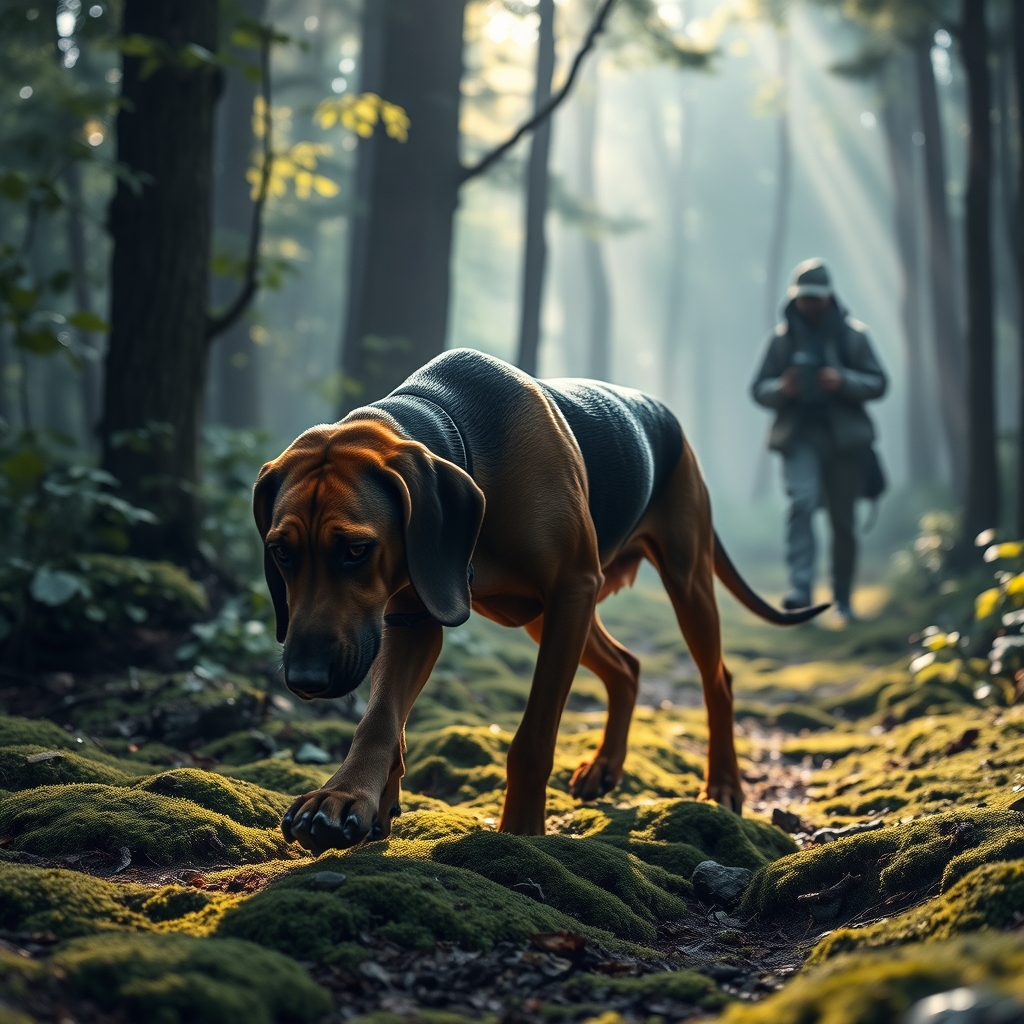
The morning mist clings to the dense undergrowth of the forest, a veil of silver that softens the edges of the world. Somewhere in the distance, a twig snaps—too faint for human ears, but not for the keen senses of a tracking dog. With a deep inhale, the animal locks onto a scent, its body tensing with purpose. This is not a hunt for prey, nor a search for a lost hiker. This is something far more profound: a mission to uncover the secrets of the wild, one invisible trail at a time.
The Nose That Knows No Bounds
Tracking dogs, particularly breeds like Bloodhounds, Beagles, and German Shorthaired Pointers, possess olfactory abilities that border on the supernatural. While humans rely on sight as their dominant sense, dogs experience the world primarily through scent. A Bloodhound’s nose, for instance, contains up to 300 million scent receptors—compared to a human’s meager 6 million. This biological marvel allows them to detect odors at concentrations nearly 100 million times lower than what we can perceive. For wildlife researchers, this is not just a curiosity; it is a game-changer.
In the vast and often impenetrable landscapes where endangered species roam, traditional tracking methods—camera traps, GPS collars, and human observation—have their limitations. Camera traps can only capture what passes in front of them, and GPS collars require animals to be captured first, a process that is stressful and sometimes dangerous. Tracking dogs, however, can follow the scent of an animal over miles of rugged terrain, through dense foliage, and across shifting landscapes. They can distinguish between individual animals of the same species, track their movements over time, and even detect the presence of elusive or nocturnal creatures that would otherwise remain hidden.
The Guardians of the Vanishing
For species teetering on the brink of extinction, every scrap of data is precious. Take the Amur leopard, for example, one of the rarest big cats in the world, with fewer than 100 individuals left in the wild. In the remote forests of the Russian Far East, tracking dogs have been deployed to locate these elusive predators, not to harm them, but to study their habits, territories, and interactions with other species. By following the scent trails left behind by the leopards, the dogs help researchers map their movements, identify critical habitats, and understand the threats they face, from poaching to habitat loss.
Similarly, in the swamps of Florida, tracking dogs have been instrumental in monitoring the Florida panther, another critically endangered species. These dogs can detect the presence of panthers in areas where human observers would struggle to find any trace. They can also locate scat, which provides invaluable genetic and dietary information without the need to capture or disturb the animals. This non-invasive approach is not only more ethical but often more effective, allowing researchers to gather data over larger areas and longer periods.
The Marriage of Instinct and Innovation
While the natural abilities of tracking dogs are awe-inspiring, their work is increasingly being augmented by cutting-edge technology. Drones equipped with thermal imaging cameras can scout ahead, identifying potential hotspots where animals might be active. GPS collars on the dogs themselves allow researchers to track their movements in real-time, ensuring their safety and providing additional data on the terrain they cover. Some teams even use portable DNA sequencers to analyze scat samples on-site, turning a tracking expedition into a mobile laboratory.
Yet, for all the technological advancements, the core of this work remains deeply rooted in the dog’s instinct. No machine can replicate the nuanced understanding of scent that a well-trained tracking dog possesses. They can differentiate between the scent of a healthy animal and one that is sick, between a male and a female, between an individual they’ve tracked before and one they haven’t. This level of detail is crucial for conservation efforts, where understanding the health, behavior, and demographics of a population can mean the difference between survival and extinction.
The Unseen Challenges
Working with tracking dogs in the wild is not without its challenges. The environments they operate in are often harsh and unforgiving—dense jungles, scorching deserts, freezing tundras. The dogs must be in peak physical condition, capable of enduring long hours of work in extreme conditions. Their handlers, too, must be highly skilled, not only in training and caring for the dogs but in interpreting their behavior and translating it into actionable data.
There are also ethical considerations. While the work these dogs do is invaluable, it is not without risks. They may encounter dangerous wildlife, inhospitable terrain, or even human threats like poachers. Ensuring their safety requires careful planning, constant vigilance, and a deep respect for the animals they are working to protect. Moreover, the dogs themselves must be treated as partners, not tools. Their well-being—physical, mental, and emotional—must always be a priority.
A Legacy Written in Scent
The stories of tracking dogs and their handlers are often untold, overshadowed by the more dramatic narratives of wildlife conservation. Yet, their contributions are woven into the very fabric of our understanding of the natural world. They are the silent observers, the unseen guides, the living bridges between human curiosity and the mysteries of the wild. As habitats shrink and species vanish at an alarming rate, their work becomes ever more critical. They do not just track animals; they track hope, one scent at a time, leaving behind a legacy that is as ephemeral as the trails they follow, yet as enduring as the wild itself.
In the quiet moments between the rustling leaves and the distant calls of the forest, it is easy to forget the invisible threads that connect us to the wild. But for those who work with tracking dogs, those threads are never far from mind. They are the lifelines of knowledge, the pathways to understanding, and the keys to a future where humans and wildlife can coexist. And as long as there are mysteries to unravel in the wild, there will be dogs with noses to the ground, following the scent of the unknown, one step at a time.