The Scented Legacy: How Tracking Dogs Are Preserving the Vanished Whispers of the Wild
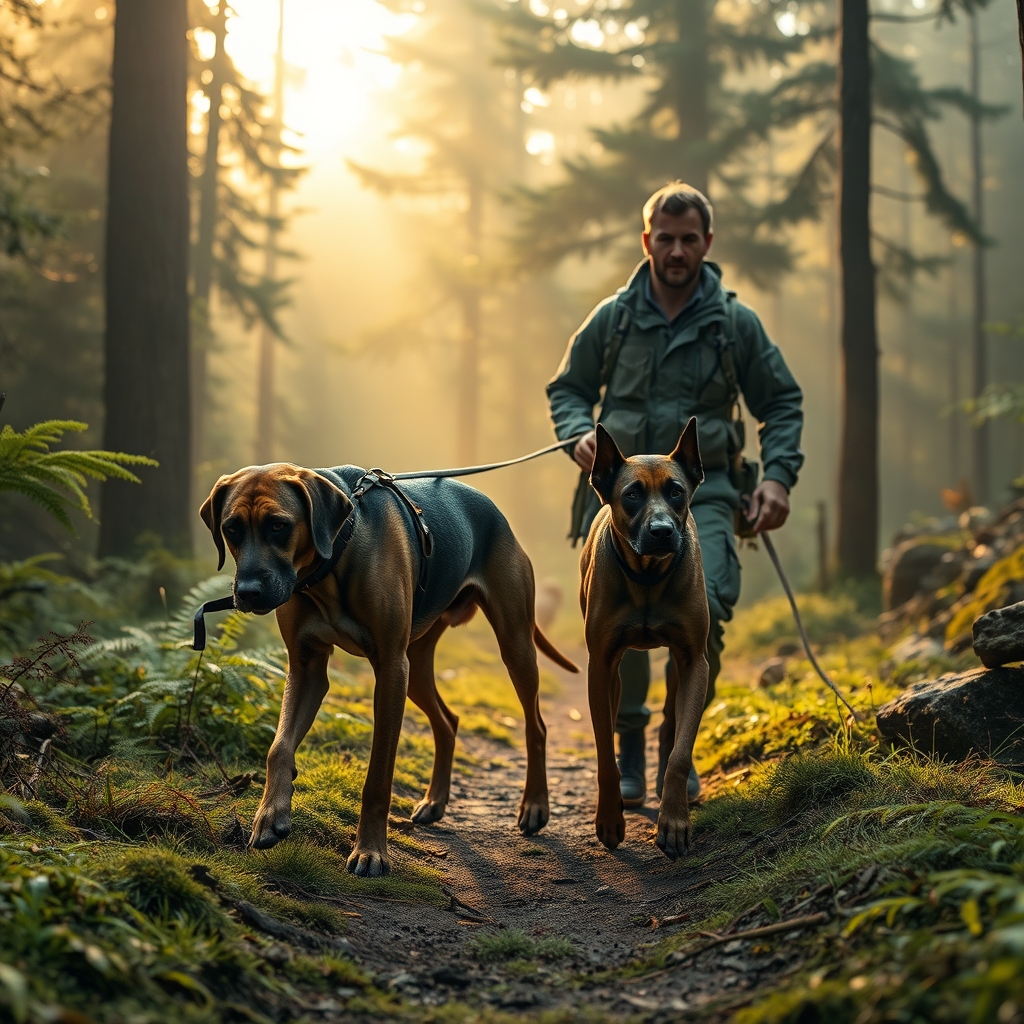
The morning mist clings to the dense undergrowth of the forest, a silent veil that softens the edges of the world. Somewhere within this emerald labyrinth, a creature moves—its presence betrayed only by the faintest disturbance of dew on leaves, the whisper of a twig snapping underfoot. To the untrained eye, the wilderness is an impenetrable wall of green and shadow, a place where secrets are guarded by the land itself. But for the tracking dog, this is a world alive with stories, each scent a thread in the tapestry of the wild, waiting to be unraveled.
The Nose That Knows No Bounds
Tracking dogs, particularly breeds like the Bloodhound, the Belgian Malinois, and the German Shepherd, possess an olfactory prowess that borders on the supernatural. Their noses are not merely tools but finely tuned instruments, capable of distinguishing the faintest traces of a scent from the cacophony of odors that saturate the natural world. A single breath can carry the story of an animal’s passage—where it has been, what it has eaten, even its emotional state. For these dogs, the wilderness is not a mystery but a map, laid out in invisible ink that only they can read.
This extraordinary ability is not just a marvel of nature; it is a lifeline for wildlife conservation. In an era where human encroachment and climate change threaten to erase the delicate balance of ecosystems, tracking dogs have become indispensable allies in the fight to preserve biodiversity. Their work spans continents, from the dense rainforests of the Amazon to the vast savannahs of Africa, where they track everything from elusive jaguars to the last remaining rhinos. Each trail they follow is a race against time, a quest to gather data, protect habitats, and ensure that the wild does not fade into silence.
The Art of the Chase: Training the Modern Scent Hound
Training a tracking dog is an art that blends science, patience, and an intimate understanding of animal behavior. It begins with the selection of the right breed—a process that considers not just physical stamina but also temperament, intelligence, and an innate drive to follow a scent. Bloodhounds, for instance, are renowned for their ability to track a scent over vast distances, their long ears and wrinkled skin designed to funnel odors toward their noses. Meanwhile, breeds like the German Shepherd bring versatility, excelling in both tracking and protection work.
The training itself is a dance between handler and dog, a partnership built on trust and mutual respect. It starts with simple scent games, where the dog learns to associate a particular odor with a reward. Over time, the challenges grow more complex: tracking a scent across varied terrain, distinguishing between multiple odors, and even identifying the direction of travel. The goal is not just to teach the dog to follow a trail but to do so with precision, ignoring distractions and focusing solely on the task at hand.
One of the most critical aspects of this training is the use of positive reinforcement. Unlike the punitive methods of the past, modern trainers rely on rewards—whether a favorite toy, a treat, or verbal praise—to motivate their dogs. This approach not only strengthens the bond between handler and dog but also ensures that the dog remains eager and engaged, even in the face of the most challenging conditions. The result is a tracking dog that is not just skilled but passionate, a partner who sees each mission as an adventure rather than a chore.
Guardians of the Vanishing Wild
The role of tracking dogs in wildlife conservation cannot be overstated. In the battle against poaching, they are often the first line of defense, their keen noses capable of detecting everything from ivory and rhino horn to pangolin scales and bushmeat. In South Africa, for example, tracking dogs have been deployed to patrol national parks, their presence alone acting as a deterrent to would-be poachers. When a poaching incident does occur, these dogs are instrumental in tracking down the perpetrators, their work leading to arrests and convictions that would otherwise be impossible.
But their contributions extend far beyond law enforcement. Tracking dogs are also vital in research, helping scientists study the behavior and movements of endangered species. By following the scent trails of animals like the Amur leopard or the Sumatran tiger, these dogs provide data that is crucial for conservation planning. They can identify migration routes, locate den sites, and even detect the presence of diseases that threaten wildlife populations. In doing so, they offer a window into the lives of creatures that would otherwise remain hidden from human view.
The Unseen Thread: Technology Meets Instinct
While the instincts of tracking dogs are unparalleled, modern technology has amplified their impact. GPS collars, drones, and thermal imaging cameras are now common tools in the field, allowing handlers to monitor their dogs’ progress in real-time and gather data with unprecedented accuracy. Yet, for all the advancements, the core of tracking work remains unchanged: it is the dog’s nose, not the gadget, that leads the way.
This synergy between technology and instinct is perhaps best illustrated in the field of wildlife forensics. When a crime against wildlife is committed, tracking dogs can be used to collect scent evidence, which is then analyzed in laboratories to identify suspects. This process, known as scent lineups, has been used successfully in cases involving everything from illegal logging to the smuggling of exotic pets. It is a testament to the power of the canine nose, a tool that is as reliable as it is ancient.
The Bond That Bridges Worlds
At the heart of every tracking dog’s success is the bond they share with their handler. This relationship is built on trust, communication, and a shared sense of purpose. Handlers must learn to read their dogs’ body language, interpreting subtle cues that indicate whether the trail is fresh or stale, whether the target is near or far. In return, the dogs must trust their handlers to guide them, to make the right decisions in the heat of the moment.
This bond is not just functional; it is emotional. For many handlers, their dogs are more than partners—they are family. The work they do together is often dangerous, physically demanding, and emotionally taxing. Yet, it is also deeply rewarding, a chance to make a tangible difference in the world. Whether they are tracking a lost hiker in the mountains or a poacher in the bush, the connection between handler and dog is what makes the impossible possible.
The wilderness is a place of endless mystery, a realm where the line between known and unknown blurs with every step. For centuries, humans have sought to understand this world, to map its secrets and preserve its wonders. Yet, for all our intelligence and technology, there are still things we cannot see, scents we cannot detect, stories we cannot hear. It is here, in the spaces between the visible and the invisible, that tracking dogs thrive. They are the silent guardians of the wild, the keepers of its secrets, and the unsung heroes of its preservation. With every trail they follow, they remind us that the wild is not just a place to be conquered but a world to be cherished, a legacy to be protected for generations to come.