From Wilderness to Rescue: The Unseen Journey of Tracking Dogs in Saving Lives
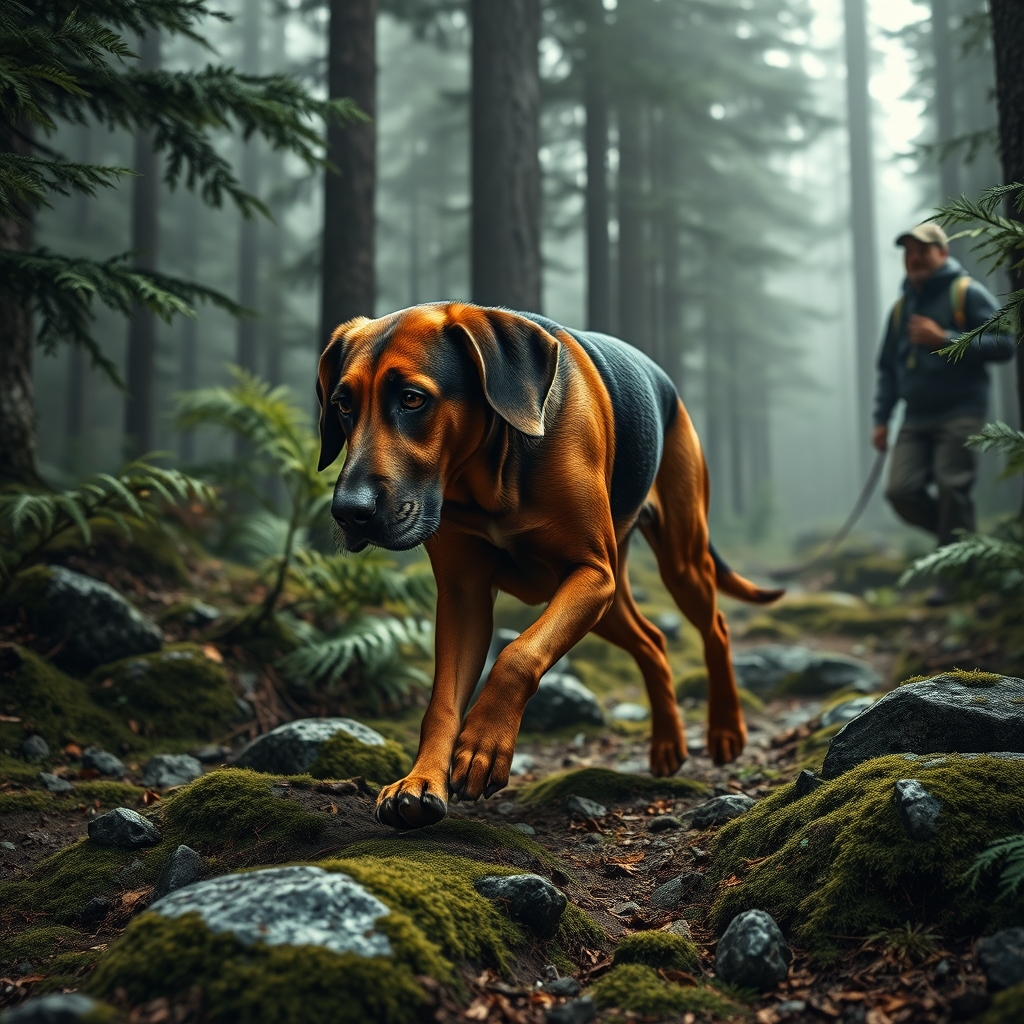
The morning mist clings to the dense undergrowth as a pair of keen, amber eyes scan the forest floor. The air is thick with the scent of damp earth, pine needles, and something else—something elusive. A Bloodhound named Duke lifts his massive head, his long, velvety ears swaying gently as he inhales deeply. His nostrils flare, capturing the faintest trace of a human scent carried on the breeze. With a low, rumbling bay, he takes off, his powerful body moving with purpose through the tangled wilderness. This is not a hunt for game; it is a mission of life and death, where every second counts and every scent tells a story.
The Ancient Art of the Nose
Tracking dogs like Duke are not just animals; they are living, breathing instruments of precision, honed by centuries of selective breeding and rigorous training. Their olfactory prowess is nothing short of extraordinary. While humans possess around 5 to 6 million scent receptors, a Bloodhound’s nose boasts an astonishing 300 million. This biological marvel allows them to detect scents that are days old, follow trails across challenging terrain, and even distinguish between individual humans based on their unique odor profiles. It is a skill that has been refined over generations, from the ancient scent hounds of Europe to the modern-day working dogs that serve in search and rescue, law enforcement, and wildlife conservation.
The relationship between humans and tracking dogs is one of mutual trust and deep understanding. Handlers spend years building a bond with their canine partners, learning to interpret their body language, vocalizations, and subtle cues. A slight tilt of the head, a change in breathing, or the intensity of a bark can convey volumes about the trail ahead. This partnership is not just about following a scent; it is about communication, intuition, and an unspoken language that transcends species.
The Crucible of Training
Training a tracking dog is a labor of love, patience, and precision. It begins with imprinting, where puppies are introduced to a variety of scents in a controlled environment. Trainers use positive reinforcement—treats, praise, and play—to encourage the young dogs to associate scent detection with reward. As the dogs mature, the training becomes more complex. They learn to follow trails through urban landscapes, dense forests, and even disaster zones, where the scent may be obscured by debris, smoke, or other distractions.
One of the most critical aspects of training is teaching the dogs to ignore distractions. In the wild, a tracking dog might encounter the scent of a deer, a bear, or even another dog. Their focus must remain unwavering, locked onto the target scent like a laser. This level of discipline is achieved through repetition, exposure to real-world scenarios, and the guidance of experienced handlers who understand the nuances of canine behavior. For search and rescue dogs, this training can mean the difference between life and death, as they are often deployed in high-stakes situations where time is of the essence.
The Call of the Wild: Tracking in Conservation
While tracking dogs are often associated with search and rescue or law enforcement, their role in wildlife conservation is equally vital. In the vast, untamed landscapes where endangered species roam, these dogs become the eyes and ears of researchers. They are deployed to track elusive animals like snow leopards, jaguars, and rhinos, helping scientists gather data on population sizes, migration patterns, and habitat use. Their ability to detect scat, hair, and other biological samples provides invaluable insights into the health and behavior of these species without the need for invasive methods.
In Africa, tracking dogs have been instrumental in combating poaching. Trained to detect the scent of ivory, rhino horn, and other illegal wildlife products, these dogs work alongside rangers to intercept poachers before they can strike. Their presence alone acts as a deterrent, as poachers know that the keen noses of these dogs can lead law enforcement directly to them. The impact of these canine conservationists is profound, offering a glimmer of hope for species teetering on the brink of extinction.
Technology Meets Tradition
The world of animal tracking has evolved dramatically with the advent of technology. GPS collars, drones, and motion-activated cameras have revolutionized the way researchers study wildlife. Yet, even in this age of innovation, the role of tracking dogs remains irreplaceable. While technology can provide data, it lacks the nuance and adaptability of a living, breathing tracker. Dogs can navigate terrain that is inaccessible to vehicles or drones, and their ability to detect scents over vast distances makes them indispensable in large-scale conservation efforts.
In search and rescue operations, technology and canine teams often work in tandem. Drones can survey large areas from above, while dogs on the ground follow the scent to pinpoint the exact location of a missing person. This synergy between tradition and innovation exemplifies the best of both worlds, where the ancient art of tracking meets the cutting edge of modern science.
The Heart of the Matter
At the core of every tracking dog’s journey is a story of connection—between human and animal, between tradition and progress, and between life and the wild. These dogs do not see themselves as heroes; they are simply doing what they were born to do, guided by instinct and the unbreakable bond they share with their handlers. Whether they are saving a lost hiker in the mountains, tracking a poacher through the savannah, or helping researchers study an endangered species, their work is a testament to the power of partnership.
Their paws leave imprints on the earth, but their impact resonates far beyond the trails they follow. In a world where the wild is increasingly encroached upon by human activity, tracking dogs stand as a bridge between two worlds, reminding us of the delicate balance that sustains life on this planet. Their noses may lead them through the wilderness, but their hearts are forever tied to the humans who trust them, the animals they protect, and the wild places they help preserve. In the quiet moments between the baying of hounds and the rustle of leaves, there is a silent understanding—a promise that as long as there are trails to follow, these dogs will be there, leading the way.