The Scent of the Wild: How Tracking Dogs Are Unraveling the Mysteries of Animal Migration
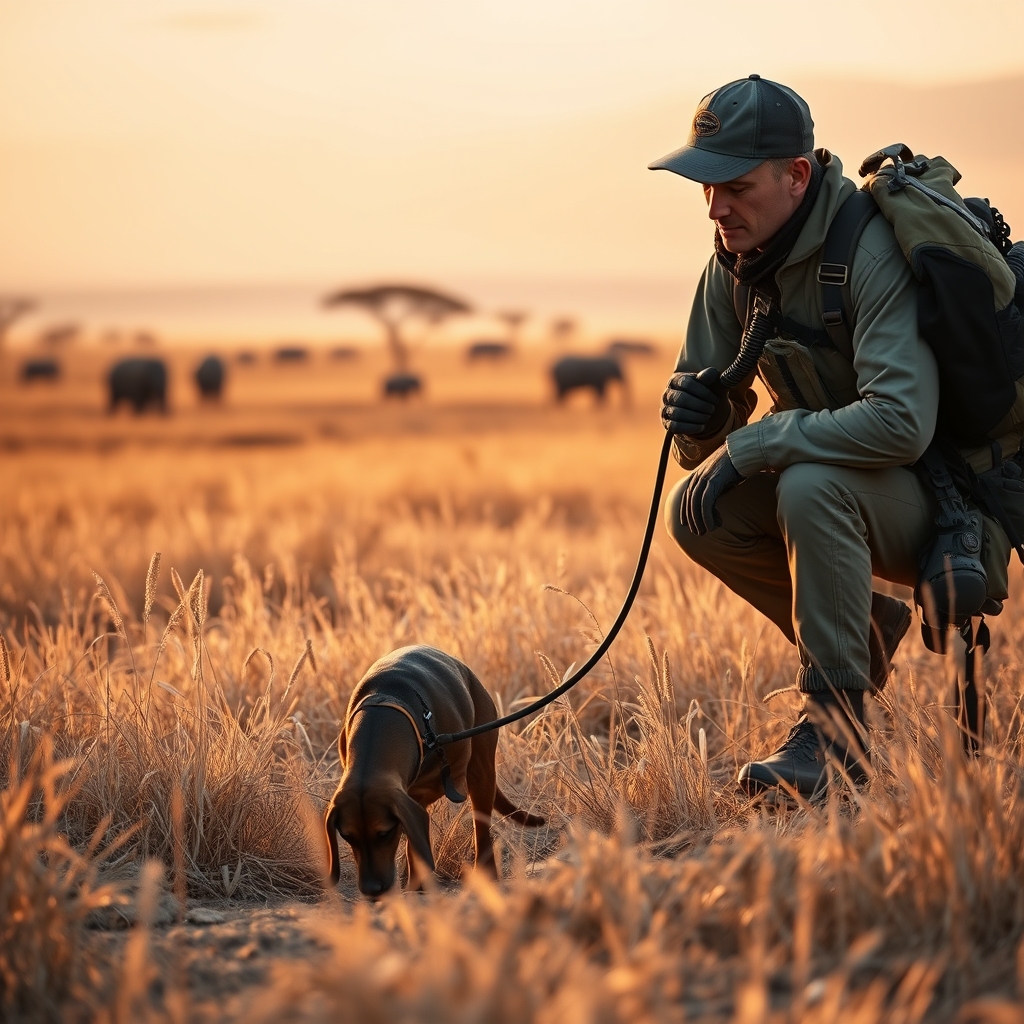
The golden hues of dawn spill across the vast expanse of the savannah, painting the landscape in warm, fleeting light. Amidst the rustling grasses and distant calls of waking birds, a figure moves with purpose—a tracking dog, its nose pressed close to the earth, weaving through the terrain with an almost supernatural focus. This is not a scene from a nature documentary, but a real-life expedition where the ancient art of scent tracking meets the cutting edge of wildlife research. These dogs, with their extraordinary olfactory abilities, are becoming indispensable allies in unraveling one of nature’s most profound mysteries: animal migration.
The Olfactory Superpower
Tracking dogs, particularly breeds like Bloodhounds, Beagles, and German Shorthaired Pointers, possess an olfactory system that borders on the miraculous. While humans have approximately 5 to 6 million scent receptors in their noses, a Bloodhound boasts an astonishing 300 million. This biological marvel allows them to detect and differentiate scents at concentrations nearly 100 million times lower than what humans can perceive. For wildlife researchers, this ability is nothing short of revolutionary. Where human eyes and technology might fail, these dogs excel, picking up the faintest traces of an animal’s passage—whether it’s the sloughed-off skin cells of a migrating snake, the residual pheromones of a herd of elephants, or the lingering scent of a rare bird that passed through days earlier.
From Hunting to Healing
The relationship between humans and tracking dogs stretches back thousands of years, rooted in the necessity of hunting for survival. Ancient civilizations, from the Egyptians to the Celts, revered these dogs for their ability to track game, often depicting them in art and mythology as symbols of loyalty and prowess. However, as humanity’s relationship with wildlife evolved, so too did the role of these canine companions. Today, tracking dogs are less about the chase and more about conservation, research, and protection. Their skills are now harnessed to monitor endangered species, study animal behavior, and even combat poaching. In the dense forests of Central Africa, for instance, tracking dogs have been deployed to sniff out snares and traps set by poachers, saving countless animals from a cruel fate. Their work is a testament to how an ancient partnership can adapt to serve modern needs.
The Science of Scent
Understanding how tracking dogs interpret the world through scent is key to appreciating their role in wildlife conservation. When an animal moves through an environment, it leaves behind a complex tapestry of odors—shed fur, urine, feces, and even the oils secreted by its skin. These scents are influenced by a myriad of factors, including the animal’s diet, health, stress levels, and reproductive status. A well-trained tracking dog can decipher this olfactory code, following a trail that might be hours, days, or even weeks old. This ability is particularly valuable in studying animal migration, a phenomenon that has long fascinated scientists but remains shrouded in mystery.
Migration Mysteries Unlocked
Animal migration is one of nature’s most awe-inspiring spectacles, yet much of it remains poorly understood. How do birds navigate thousands of miles across continents with pinpoint accuracy? What drives herds of wildebeest to embark on perilous journeys across the Serengeti? Why do certain species of butterflies undertake generational migrations that span entire lifetimes? These questions have puzzled researchers for decades, but tracking dogs are beginning to provide answers. By following the scent trails of migrating animals, these dogs can help scientists map migration routes, identify critical stopover sites, and even uncover the environmental cues that trigger these epic journeys. In the Arctic, for example, tracking dogs have been used to study the migration patterns of caribou, revealing how climate change is altering their traditional routes and threatening their survival.
The Bond Between Handler and Dog
The success of a tracking dog in the field hinges not just on its innate abilities, but on the deep bond it shares with its handler. This partnership is built on trust, communication, and mutual respect. Handlers must learn to read their dog’s body language—every wag of the tail, every tilt of the head, every sudden pause is a clue to what the dog has detected. In return, the dog must trust its handler to interpret its findings and act accordingly. This relationship is forged through rigorous training, often beginning when the dog is just a puppy. Positive reinforcement, patience, and consistency are key, as the dog learns to associate the scent of a specific animal with a reward, whether it’s a treat, a toy, or simply praise. Over time, this training transforms the dog into a highly specialized tool, capable of performing tasks that no human or machine could achieve alone.
Technology Meets Tradition
While tracking dogs are a product of centuries-old traditions, their work is increasingly being augmented by modern technology. GPS collars, drones, and thermal imaging cameras are now common tools in the field, allowing researchers to track animals over vast distances and in real-time. However, these technologies have their limitations. GPS signals can be unreliable in dense forests or rugged terrain, and drones may disturb the very animals they are meant to study. Tracking dogs, on the other hand, are non-invasive and adaptable, capable of working in environments where technology fails. Moreover, their ability to detect scents over long distances and through challenging conditions makes them indispensable in remote or inaccessible areas. The synergy between canine tracking and technology is creating a new frontier in wildlife research, one where the old and the new coexist in harmony.
The Ethical Dimension
As the use of tracking dogs in wildlife conservation grows, so too do the ethical considerations. Critics argue that the training and deployment of these dogs can be stressful for the animals, particularly if they are subjected to harsh conditions or excessive workloads. There are also concerns about the potential for tracking dogs to disturb wildlife, particularly in sensitive ecosystems. To address these issues, conservation organizations are adopting strict ethical guidelines, ensuring that dogs are treated with care and respect, and that their work is conducted in a way that minimizes harm to both the dogs and the animals they track. This includes providing proper veterinary care, limiting the duration of tracking sessions, and avoiding areas where endangered species are known to nest or breed. By prioritizing the well-being of both the dogs and the wildlife they study, researchers can ensure that this invaluable tool remains sustainable and humane.
The sun dips below the horizon, casting long shadows across the landscape as the tracking dog and its handler make their way back to camp. The day’s work is done, but the data collected will contribute to a growing body of knowledge that is reshaping our understanding of the natural world. In the quiet moments between the rustling of leaves and the distant calls of nocturnal creatures, it’s easy to reflect on the profound connection between humans and animals—a connection that has endured for millennia and continues to evolve in ways we are only beginning to comprehend. These dogs, with their unwavering dedication and extraordinary abilities, are not just tracking scents; they are tracing the very essence of life on Earth, one paw print at a time.