Scent of Survival: How Tracking Dogs Safeguard the Fragile Balance of Wildlife Habitats
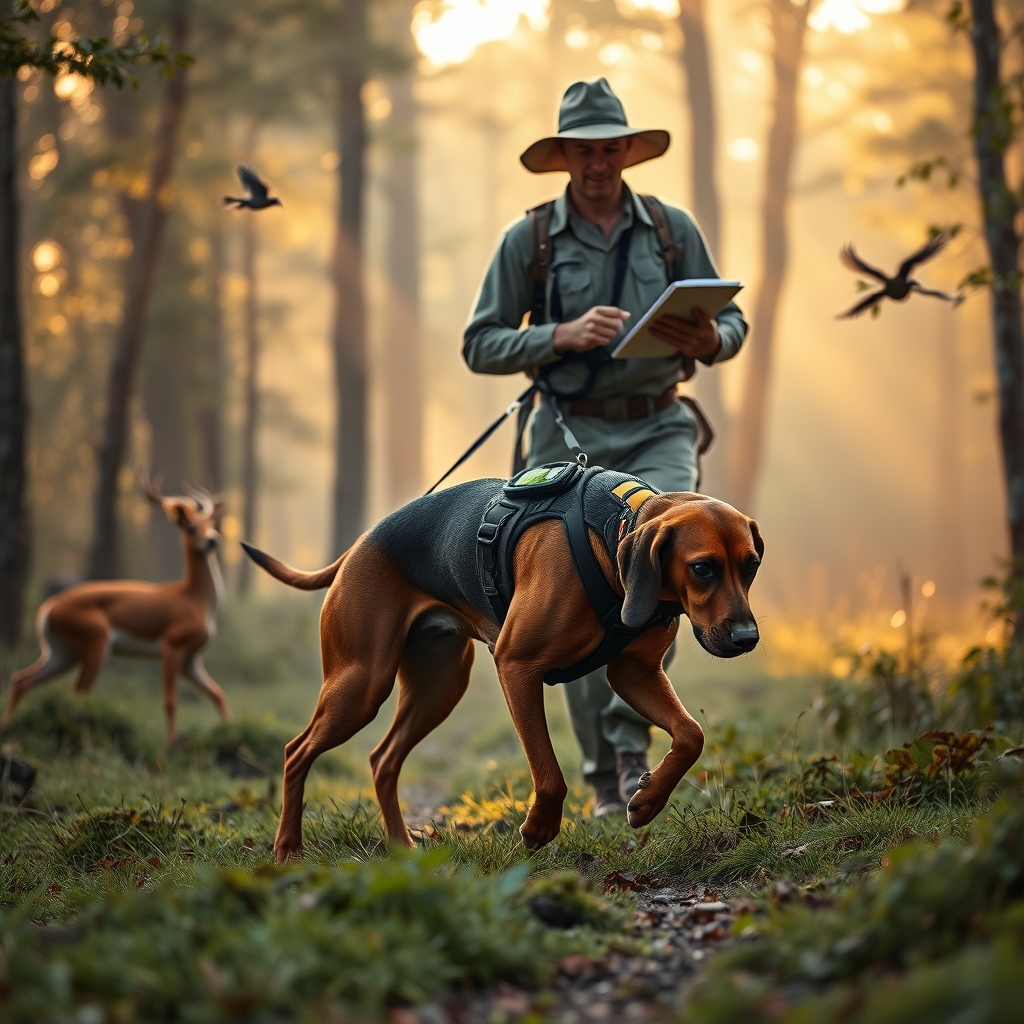
The morning mist clings to the dense undergrowth of the forest, a silent veil that softens the edges of the world. Somewhere within this green labyrinth, a creature moves—light-footed, nearly invisible. But to the keen nose of a tracking dog, its presence is as clear as a beacon. With a deep inhale, the dog locks onto the scent, muscles tensing beneath its sleek coat, and the chase begins—not for sport, not for conquest, but for survival. In the delicate dance of wildlife conservation, these canine detectives are the unsung sentinels, their work as vital as the ecosystems they help protect.
The Ancient Bond: Dogs and the Wild
For thousands of years, humans and dogs have shared a partnership forged in the wilderness. From the earliest hunting companions to the modern-day conservationists, dogs have relied on their extraordinary olfactory abilities to navigate the natural world. A dog’s nose is a marvel of biological engineering, capable of detecting scents at concentrations nearly 100 million times lower than what humans can perceive. This sensory superpower makes them indispensable in tracking elusive or endangered species, monitoring wildlife populations, and even detecting illegal poaching activity.
In the vast landscapes of Africa’s savannas or the dense rainforests of the Amazon, tracking dogs have become an extension of the conservationist’s toolkit. Breeds like the Bloodhound, Belgian Malinois, and German Shorthaired Pointer are not just pets or working animals—they are guardians of biodiversity. Their ability to follow scent trails over vast distances and challenging terrain allows researchers to gather data that would otherwise be impossible to obtain. Whether it’s locating a wounded rhino in the brush or tracking the movements of a rare Amur leopard, these dogs provide a bridge between human understanding and the hidden lives of wild animals.
Beyond the Hunt: The Role of Tracking Dogs in Conservation
The work of tracking dogs extends far beyond the traditional role of hunting. In wildlife conservation, their contributions are multifaceted and often life-saving. One of their most critical tasks is anti-poaching. In regions plagued by illegal wildlife trade, dogs are trained to detect contraband such as ivory, rhino horn, and pangolin scales. Their keen noses can sniff out hidden caches in vehicles, luggage, and even shipping containers, making them a formidable force against the black-market trade that threatens so many species.
But their impact doesn’t stop at law enforcement. Tracking dogs are also instrumental in habitat restoration and species reintroduction programs. For example, in the efforts to revive the red wolf population in the southeastern United States, dogs have been used to monitor the movements and health of released individuals. By tracking their scent, researchers can ensure the wolves are adapting to their new environments, avoiding human settlements, and finding adequate food sources. This data is invaluable in shaping conservation strategies and ensuring the long-term success of reintroduction efforts.
The Science of Scent: How Tracking Dogs Decode the Wild
The process of training a tracking dog is as much an art as it is a science. It begins with selecting the right breed—one with a natural inclination for scent work, high energy, and an unyielding focus. Bloodhounds, with their legendary tracking abilities, are often the breed of choice for long-distance scent work, while Belgian Malinois and Labrador Retrievers excel in detection tasks due to their agility and trainability.
Training a tracking dog involves a combination of positive reinforcement, scent association, and real-world simulations. Handlers use a variety of tools, from scent pads infused with the odor of target species to mock scenarios that mimic the challenges the dogs will face in the field. Over time, the dogs learn to distinguish between the scents of different animals, ignore distractions, and communicate their findings to their handlers through specific behaviors, such as sitting, barking, or leading them to the source of the scent.
Advancements in technology have also enhanced the capabilities of tracking dogs. GPS collars and drones are now used in conjunction with canine teams to provide real-time data on animal movements. This integration of traditional tracking methods with modern technology allows conservationists to cover larger areas, gather more precise data, and respond more quickly to threats. For instance, in the fight against poaching, drones can scout vast areas for signs of human activity, while dogs on the ground can pinpoint the exact location of poachers or their traps.
The Emotional Connection: Dogs as Ambassadors for Wildlife
Beyond their technical skills, tracking dogs play a unique role in fostering a deeper connection between humans and the natural world. Their work often brings them into close contact with endangered species, creating opportunities for researchers and the public alike to witness the beauty and fragility of wildlife firsthand. Stories of tracking dogs forming bonds with the animals they monitor—such as a Bloodhound named Tucker who became a beloved figure in the effort to save the Florida panther—highlight the emotional depth of this work.
These dogs also serve as ambassadors for conservation efforts, helping to raise awareness and inspire action. When people see a tracking dog in action, whether in a nature documentary or at a wildlife sanctuary, it humanizes the often abstract concept of conservation. It reminds us that the fight to protect endangered species is not just about statistics and policies, but about the living, breathing creatures that share our planet—and the remarkable dogs that help keep them safe.
The Future of Tracking Dogs in Wildlife Conservation
As the challenges facing wildlife continue to grow, so too does the importance of tracking dogs in conservation efforts. Climate change, habitat destruction, and illegal wildlife trade are pushing many species to the brink of extinction, and the need for innovative solutions has never been greater. Tracking dogs, with their unparalleled abilities and unwavering dedication, are poised to play an even larger role in the years to come.
Emerging technologies, such as artificial intelligence and machine learning, are beginning to complement the work of tracking dogs. For example, researchers are exploring ways to use AI to analyze scent data collected by dogs, potentially identifying patterns that could predict animal movements or detect early signs of disease. While these technologies are still in their infancy, they hold the promise of enhancing the effectiveness of canine teams and expanding their reach.
Yet, for all the advancements in technology, the heart of conservation will always lie in the partnership between humans and dogs. The bond between a handler and their tracking dog is built on trust, mutual respect, and a shared commitment to protecting the wild. It is a bond that transcends language, culture, and species—a testament to the enduring connection between humans and the natural world. In the quiet moments between the rustling leaves and the distant calls of wildlife, it is the steady breath of a tracking dog, the soft pad of its paws on the earth, that reminds us of the delicate balance we all share. Their work is a quiet but powerful force, a scent of survival in a world that desperately needs it.