The Scent Trail: How Tracking Dogs Are Decoding the Language of the Wild
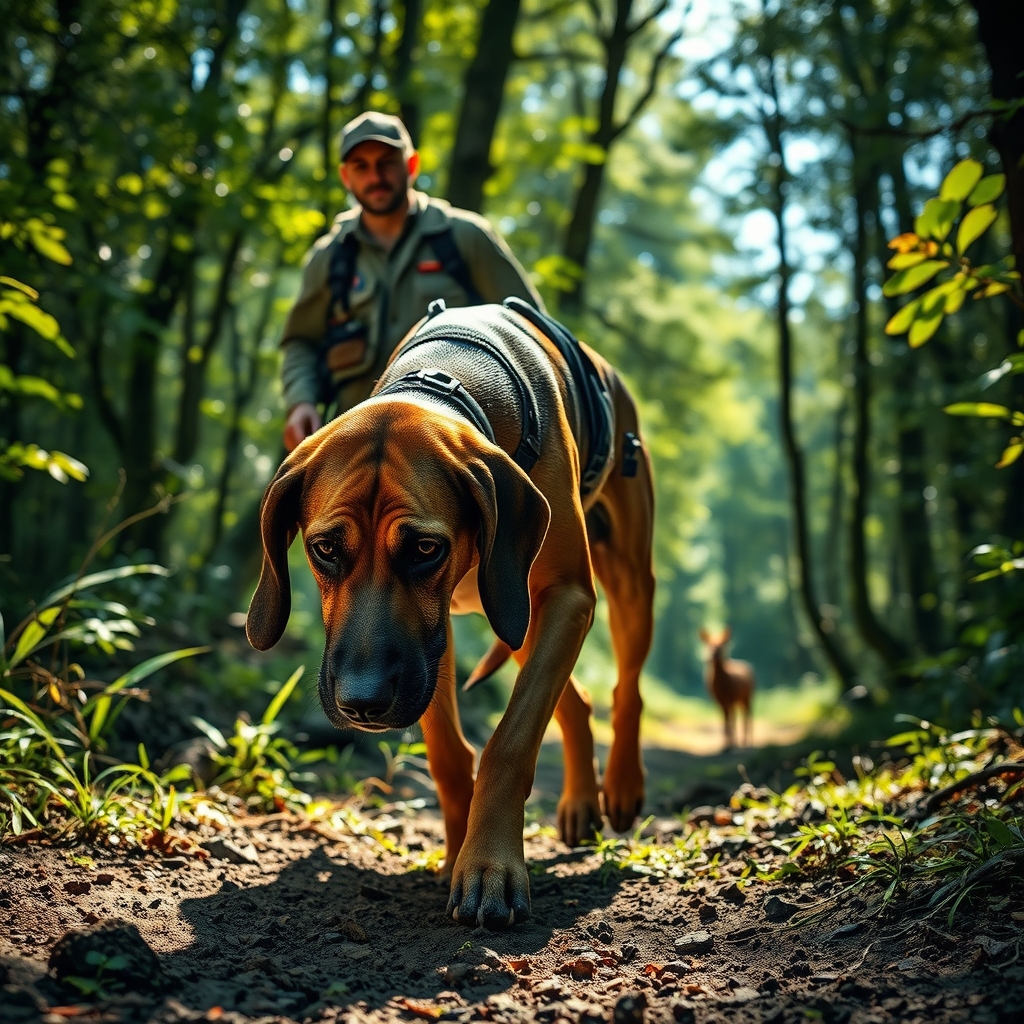
The forest breathes in silence, a vast, whispering expanse where every leaf, every rustle of undergrowth, tells a story. For centuries, humans have sought to understand these stories, to decipher the language of the wild. Yet, no tool has proven as profound—or as poetic—as the nose of a tracking dog. These remarkable animals, with their extraordinary olfactory abilities, are not just hunters or companions; they are translators of the natural world, bridging the gap between human curiosity and the secrets of the wilderness.
The Science of Scent: How Tracking Dogs Read the Earth
To comprehend the magic of tracking dogs, one must first understand the science behind their gift. A dog’s nose is a marvel of evolution, containing up to 300 million olfactory receptors—compared to a human’s mere 6 million. This biological advantage allows them to detect scents at concentrations nearly 100 million times lower than what humans can perceive. But it’s not just about sensitivity; it’s about interpretation. When a tracking dog sniffs the ground, it’s not merely following a trail—it’s reading a narrative written in molecules.
Take the bloodhound, for instance, a breed revered for its tracking prowess. Their long, drooping ears and wrinkled skin aren’t just for show; they serve a purpose. The ears help stir up scent particles from the ground, while the loose skin around their face traps those particles, funneling them toward their nose. It’s a living, breathing scent analysis machine, capable of distinguishing between the faintest traces of an animal’s passage, even days after it has moved through an area. This ability isn’t just useful for hunting; it’s a game-changer for wildlife conservation.
The Role of Tracking Dogs in Wildlife Conservation
In the realm of wildlife conservation, tracking dogs are unsung heroes. Their work often goes unnoticed, yet their impact is profound. One of their most critical roles is in monitoring endangered species. Traditional methods of tracking, such as camera traps or GPS collars, have limitations. They can be invasive, expensive, or ineffective in dense vegetation. Tracking dogs, however, can cover vast areas quickly, following the scent trails of elusive animals like the Amur leopard or the Javan rhinoceros. Their presence alone can deter poachers, who know that these dogs can pick up their scent long after they’ve left the scene.
Beyond poaching, tracking dogs are instrumental in studying animal behavior. Researchers use them to locate nests, dens, and migration paths, providing invaluable data on species that are otherwise difficult to observe. For example, in the dense rainforests of Central Africa, tracking dogs have helped scientists uncover the movements of the elusive okapi, a relative of the giraffe that was once thought to be nearly impossible to study in the wild. By following the okapi’s scent, these dogs have opened a window into the lives of one of the planet’s most mysterious creatures.
The Bond Between Handler and Hound: A Partnership Forged in Trust
The relationship between a tracking dog and its handler is one of the most profound partnerships in the animal kingdom. It’s built on trust, communication, and mutual respect. A handler doesn’t just train a dog; they learn to interpret its signals, to understand the subtle shifts in body language that indicate whether the dog is on a hot trail or merely picking up a distraction. This bond is especially critical in high-stakes environments, such as search and rescue operations or anti-poaching patrols, where a single misstep can mean the difference between success and failure.
Training a tracking dog is an art as much as it is a science. It begins with imprinting—the process of introducing the dog to the scent it will eventually track. For wildlife conservation dogs, this might mean exposing them to the scent of a specific animal, such as a pangolin or a cheetah. The dog learns to associate that scent with a reward, typically a toy or a treat, creating a positive reinforcement loop. Over time, the dog’s natural hunting instincts are channeled into a focused, disciplined pursuit, guided by the handler’s commands.
The Future of Tracking: Technology Meets Tradition
As technology advances, so too does the role of tracking dogs. Today, many conservation teams are integrating GPS collars, drones, and even artificial intelligence with traditional tracking methods. Drones can scout large areas from above, identifying potential hotspots where tracking dogs can then be deployed. GPS collars on the dogs themselves allow handlers to monitor their movements in real-time, ensuring their safety in rugged or dangerous terrain. Meanwhile, AI algorithms are being developed to analyze scent data, potentially predicting animal movements before they even occur.
Yet, for all the promise of technology, the nose of a tracking dog remains irreplaceable. No machine can replicate the nuanced understanding of scent that these animals possess. They are living, breathing tools of conservation, capable of adapting to the ever-changing dynamics of the wild. In a world where human encroachment threatens to erase the boundaries between civilization and wilderness, tracking dogs stand as a reminder of the deep, primal connection we share with the natural world.
Beyond the Trail: The Ethical Dimension of Tracking Dogs
With great power comes great responsibility. The use of tracking dogs in wildlife conservation raises important ethical questions. How do we ensure that these dogs are treated with the respect and care they deserve? How do we balance their role in conservation with the need to protect the animals they track? These are not easy questions to answer, but they are essential to the future of tracking dog programs.
One of the key considerations is the welfare of the dogs themselves. Tracking dogs often work in harsh, unpredictable environments, from the scorching savannahs of Africa to the frozen tundras of the Arctic. Their handlers must prioritize their health and safety, ensuring they are well-fed, hydrated, and rested. Additionally, the use of tracking dogs must be carefully regulated to avoid causing stress or harm to the wildlife they are meant to protect. For example, dogs should never be allowed to chase or harass the animals they track, as this can disrupt natural behaviors and even lead to injury.
Another ethical concern is the potential for tracking dogs to be used in ways that harm wildlife, such as in illegal hunting or poaching. To combat this, many conservation organizations are working to establish strict guidelines and certifications for tracking dog programs. These guidelines ensure that the dogs are used solely for conservation purposes, under the supervision of trained professionals who prioritize the well-being of both the dogs and the wildlife they track.
The story of tracking dogs is one of partnership, innovation, and respect. It’s a testament to the incredible bond between humans and animals, and to the power of scent as a language that transcends species. As we continue to explore the mysteries of the wild, these dogs will remain our guides, our translators, and our allies. They remind us that the natural world is not just a resource to be exploited, but a living, breathing entity that deserves our admiration, our protection, and our understanding. In their paws and their noses, we find not just a tool for conservation, but a deeper connection to the earth and all its inhabitants.