The Invisible Thread: How Tracking Dogs Weave Technology and Tradition in Wildlife Conservation
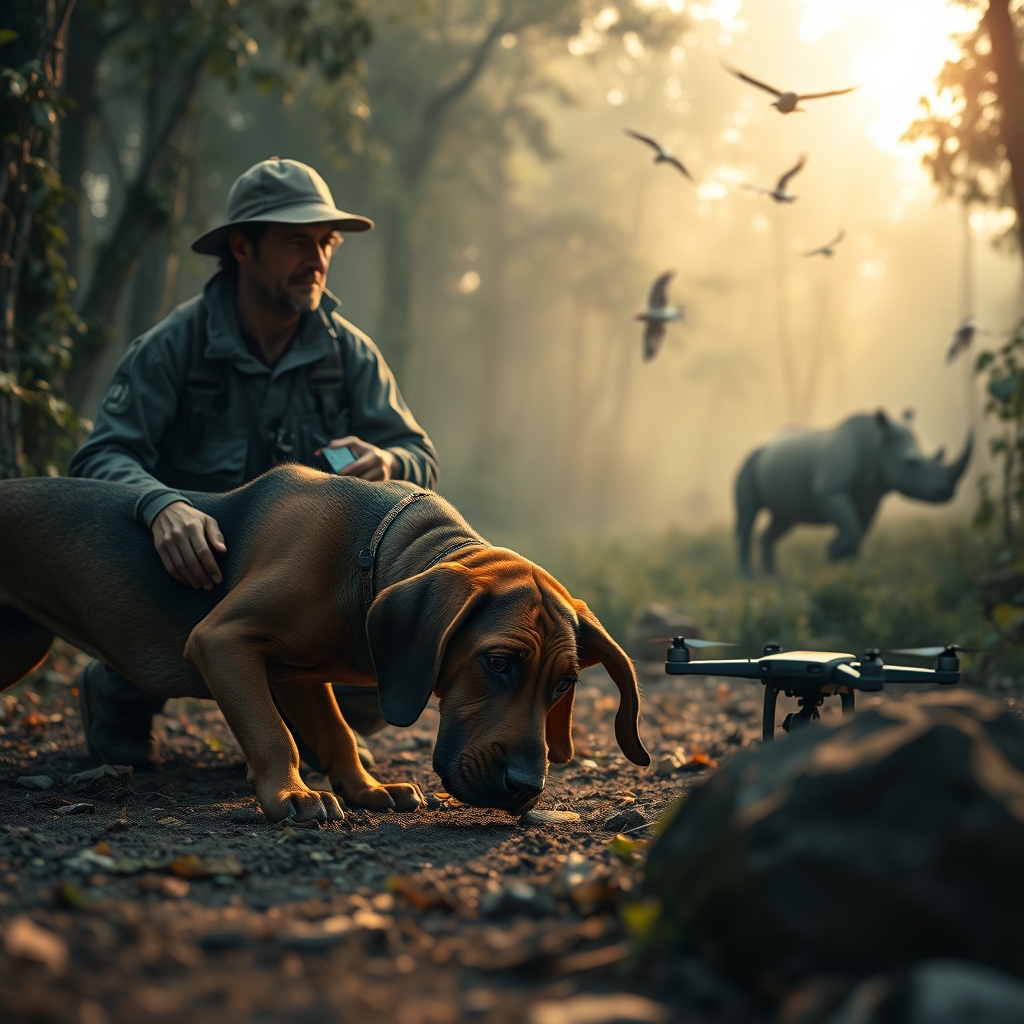
The morning mist clings to the dense undergrowth of the forest, a living tapestry woven with the whispers of unseen creatures. Among the towering trees and tangled vines, a different kind of hunter moves—one whose power lies not in claws or teeth, but in an extraordinary sense of smell. The tracking dog, a living bridge between ancient instincts and modern science, steps lightly over the damp earth, its nose attuned to the invisible threads that connect every living thing in the wild. This is where tradition meets technology, where the age-old art of tracking converges with cutting-edge conservation efforts to protect the fragile tapestry of life.
The Nose That Knows: The Science Behind the Scent
To understand the role of tracking dogs in wildlife conservation, one must first grasp the sheer magnitude of their olfactory prowess. A dog’s nose is a marvel of biological engineering, capable of detecting scents at concentrations as low as one part per trillion. For context, if a single drop of blood were diluted in twenty Olympic-sized swimming pools, a well-trained tracking dog could still detect it. This extraordinary ability is not merely a curiosity—it is a tool, one that has been honed over centuries of selective breeding and training to serve humanity in ways that technology alone cannot replicate.
Bloodhounds, for instance, are often the stars of the tracking world. Their long, drooping ears and wrinkled faces are not just endearing traits; they serve a functional purpose. The ears help to sweep scent particles toward the nose, while the loose skin around their face traps and concentrates odors. When a Bloodhound locks onto a scent, it is not merely following a trail—it is reconstructing a story, one molecule at a time. This ability makes them invaluable in tracking endangered species, locating poachers, and even detecting diseases in wildlife populations before they become outbreaks.
From the Wild to the Lab: The Evolution of Tracking Technology
While the dog’s nose remains the gold standard for tracking, modern technology has begun to complement and enhance these natural abilities. GPS collars, drones, and thermal imaging cameras are now common tools in the conservationist’s arsenal, but they are not without limitations. A drone can cover vast areas quickly, but it cannot distinguish between the scent of a poacher and that of a researcher. A camera trap can capture images of elusive animals, but it cannot follow them through dense undergrowth or across rugged terrain. This is where the tracking dog excels—where technology falters, the dog’s instincts take over.
One of the most exciting developments in this field is the integration of artificial intelligence with canine tracking. Researchers are now using machine learning algorithms to analyze the data collected by tracking dogs, identifying patterns in animal behavior that were previously invisible to the human eye. For example, by tracking the movements of apex predators like wolves or leopards, conservationists can gain insights into their hunting patterns, territorial disputes, and even social structures. This data is then used to inform conservation strategies, ensuring that human encroachment does not disrupt these delicate ecosystems.
The Guardians of the Wild: How Tracking Dogs Protect Endangered Species
In the fight to protect endangered species, tracking dogs are often the first line of defense. Their ability to detect the presence of rare animals, even in the most remote and inaccessible locations, makes them indispensable in anti-poaching efforts. In Africa, for instance, tracking dogs have been deployed to sniff out ivory, rhino horn, and other illegal wildlife products, leading to the arrest of poachers and the dismantling of trafficking networks. In South America, they are used to track the elusive jaguar, helping researchers understand its movements and habitat preferences in order to better protect it from habitat loss and human conflict.
But tracking dogs do more than just locate animals—they also help to monitor their health. By detecting the scent of disease in wildlife populations, they can alert conservationists to potential outbreaks before they spread. This early warning system is particularly crucial in the case of zoonotic diseases, which can jump from animals to humans. In the wake of the COVID-19 pandemic, the role of tracking dogs in disease detection has taken on new urgency, as scientists race to prevent the next global health crisis.
The Human-Animal Bond: A Partnership Forged in the Wild
The relationship between a tracking dog and its handler is one of the most profound bonds in the animal kingdom. It is a partnership built on trust, communication, and mutual respect, one that transcends the boundaries of species. A well-trained tracking dog does not work out of fear or coercion—it works because it wants to, because the bond with its handler is stronger than any distraction the wild can throw its way. This bond is the foundation of every successful tracking operation, whether it is locating a lost hiker in the wilderness or tracking a wounded animal through dense forest.
Training a tracking dog is as much an art as it is a science. It requires patience, consistency, and an intimate understanding of animal behavior. The best handlers are those who can think like their dogs, anticipating their movements and interpreting their signals with precision. This level of communication is not achieved overnight—it is the result of years of shared experiences, of triumphs and setbacks, of quiet moments spent together in the heart of the wild. It is a relationship that defies easy explanation, one that can only be understood by those who have witnessed it firsthand.
The Future of Tracking: Where Tradition Meets Innovation
As the world grapples with the challenges of climate change, habitat loss, and biodiversity decline, the role of tracking dogs in wildlife conservation has never been more critical. Yet, their work is not without controversy. Some argue that the use of dogs in conservation is an outdated practice, one that should be replaced by more advanced technologies. Others worry about the welfare of the dogs themselves, questioning whether it is ethical to subject them to the dangers of the wild. These are valid concerns, but they overlook the unique advantages that tracking dogs bring to the table—advantages that no machine can replicate.
The future of tracking lies not in choosing between tradition and technology, but in finding ways to integrate the two. Imagine a world where tracking dogs are equipped with lightweight, non-invasive sensors that transmit real-time data to researchers, allowing them to monitor wildlife populations without ever setting foot in the field. Picture a scenario where drones and dogs work in tandem, with the drone scouting from above while the dog tracks on the ground, each complementing the other’s strengths. This is not science fiction—it is the next frontier of wildlife conservation, a frontier where the ancient art of tracking meets the cutting edge of innovation.
The wild is a place of mystery and wonder, a realm where every rustle of leaves and snap of a twig tells a story. For centuries, humans have sought to unravel these stories, to understand the intricate web of life that sustains our planet. Tracking dogs, with their extraordinary senses and unwavering dedication, are our guides in this quest. They do not merely follow trails—they weave them, connecting the dots between past and present, between human and animal, between tradition and technology. In their paws lies the future of wildlife conservation, a future where the invisible threads of the wild are brought into the light, one scent at a time.