
Whispers of the Wild: How Tracking Dogs Uncover the Hidden Lives of Apex Predators
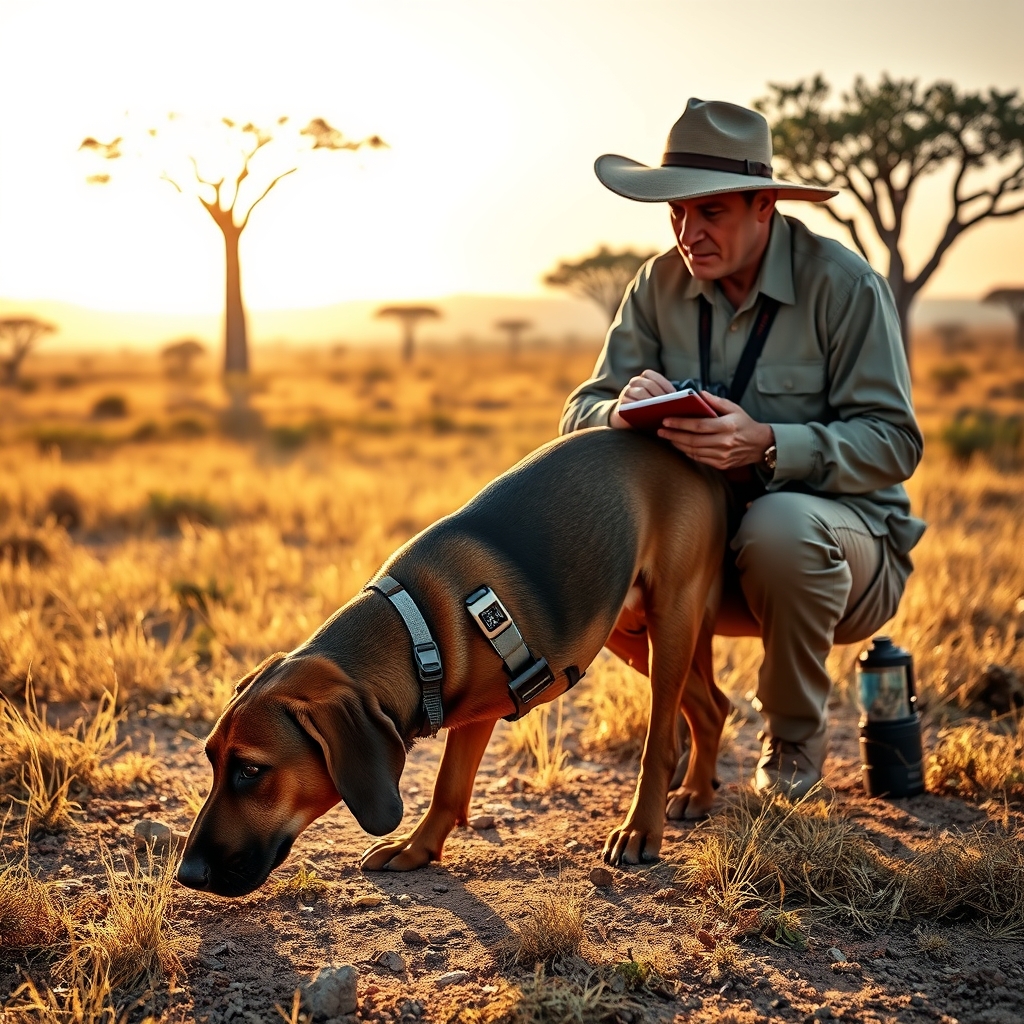
The dense underbrush of the African savanna rustles as a shadow moves with purpose. A lion, the undisputed king of this realm, pads silently along a game trail, its golden eyes scanning for prey. Miles away, in a research camp humming with quiet activity, a different kind of hunter prepares for the chase—not with claws or teeth, but with an extraordinary nose. A Bloodhound, its velvety ears dragging in the dust, is fitted with a harness and a GPS collar. Its handler whispers a command, and the dog lifts its head, nostrils flaring as it catches the faintest whisper of a scent carried on the wind. This is not a hunt for sport or survival, but a mission to uncover the secrets of the wild, one invisible trail at a time.
The Nose That Knows No Bounds
Tracking dogs, particularly breeds like Bloodhounds, German Shorthaired Pointers, and Belgian Malinois, possess olfactory abilities that border on the supernatural. A Bloodhound’s nose, for instance, contains up to 300 million scent receptors—compared to a human’s paltry 5 million. This biological marvel allows them to detect and follow scents that are days old, even when diluted by rain, wind, or the passage of time. For wildlife researchers, these dogs are not just tools; they are partners in a delicate dance with nature, capable of revealing the movements and behaviors of apex predators without ever disturbing them.
In the vast and often impenetrable wilderness, where human observation is limited by terrain and the elusive nature of animals, tracking dogs act as living, breathing bridges between the seen and unseen. They can follow the trail of a leopard through dense jungle, a wolf across a snowy expanse, or a jaguar along the banks of a river, providing researchers with data that would otherwise be impossible to collect. Their work is silent but transformative, offering a window into the lives of creatures that have long evaded human understanding.
Guardians of the Wild: Conservation in Action
The role of tracking dogs in wildlife conservation cannot be overstated. As human encroachment, climate change, and poaching threaten ecosystems worldwide, these dogs are on the front lines, helping to monitor and protect endangered species. In Africa, they track rhinos and elephants to deter poachers, their keen noses detecting the scent of humans long before they can harm these majestic animals. In the Americas, they assist in studying the movements of cougars and bears, providing critical data that informs habitat preservation efforts.
One of the most remarkable applications of tracking dogs is in the study of apex predators. These animals, at the top of the food chain, play a crucial role in maintaining the balance of their ecosystems. By understanding their movements, hunting patterns, and social structures, researchers can develop strategies to protect not just the predators themselves, but the entire web of life that depends on them. Tracking dogs make this possible by venturing into territories where humans cannot go, their noses leading the way through landscapes that are as dangerous as they are beautiful.
The Bond Between Handler and Hound
The relationship between a tracking dog and its handler is one of trust, mutual respect, and deep understanding. Handlers spend years training their dogs, teaching them to distinguish between the scents of different animals, to ignore distractions, and to work tirelessly in environments that would challenge even the most seasoned human. This bond is the foundation of their success. A well-trained tracking dog is not just a tool; it is a companion, a colleague, and often, a lifeline in the wild.
Training a tracking dog is an art as much as it is a science. It begins with imprinting, where puppies are introduced to the scents they will later track, often using samples collected from the wild. As they grow, they learn to follow these scents over increasingly difficult terrain, their natural instincts honed through positive reinforcement. The best tracking dogs are those that see their work as play—a game of hide-and-seek where the stakes are the survival of species and the preservation of wild places.
Technology Meets Instinct
While the instincts of tracking dogs are unparalleled, modern technology has amplified their impact. GPS collars allow researchers to map the paths these dogs take, creating detailed records of animal movements that can span hundreds of miles. Drones equipped with thermal imaging cameras work alongside tracking teams, providing aerial views of the terrain and helping to locate animals that might otherwise remain hidden. Together, these tools create a powerful synergy, blending the ancient art of tracking with cutting-edge science to unlock the mysteries of the wild.
Yet, for all the advancements in technology, it is the dog’s nose that remains irreplaceable. No machine can replicate the nuanced understanding of scent that a tracking dog possesses. They can detect the difference between a healthy animal and a sick one, a male and a female, a juvenile and an adult—all from the faintest traces left behind. In a world where wildlife is increasingly threatened, these dogs are a beacon of hope, their work a testament to the power of partnership between humans and animals.
Stories from the Field: A Day in the Life of a Tracking Team
Imagine waking before dawn in a remote research camp, the air thick with the scent of damp earth and distant rain. The team gathers around a map, tracing the last known location of a collared lioness. The Bloodhound, already alert, paces eagerly as its handler prepares for the day’s work. The goal is not to find the lioness herself, but to follow the trail she left behind—footprints, broken branches, the faintest hint of her presence on the wind. As the dog sets off, the team follows at a distance, their eyes scanning the horizon for any sign of movement.
Hours later, the dog stops abruptly, its body tense with excitement. It has found something—a scrap of fur caught on a thorn bush, a patch of disturbed earth where the lioness rested. The handler rewards the dog with a treat and a word of praise, while the researchers take notes, their cameras clicking softly as they document the find. This is how the story of the wild is written, not in grand gestures, but in the quiet, persistent work of those who listen to its whispers.
In the heart of the wilderness, where the line between human and animal blurs, tracking dogs stand as silent witnesses to the rhythms of nature. They do not judge, they do not interfere; they simply follow the scent, wherever it may lead. Through their eyes—or rather, their noses—we gain a deeper appreciation for the complexity and beauty of the wild. And in doing so, we are reminded that conservation is not just about protecting animals; it is about preserving the delicate balance that sustains us all. The trails they uncover are not just paths through the bush, but threads in the tapestry of life, each one a story waiting to be told.