The Unsung Heroes: How Tracking Dogs Are Revolutionizing Wildlife Conservation
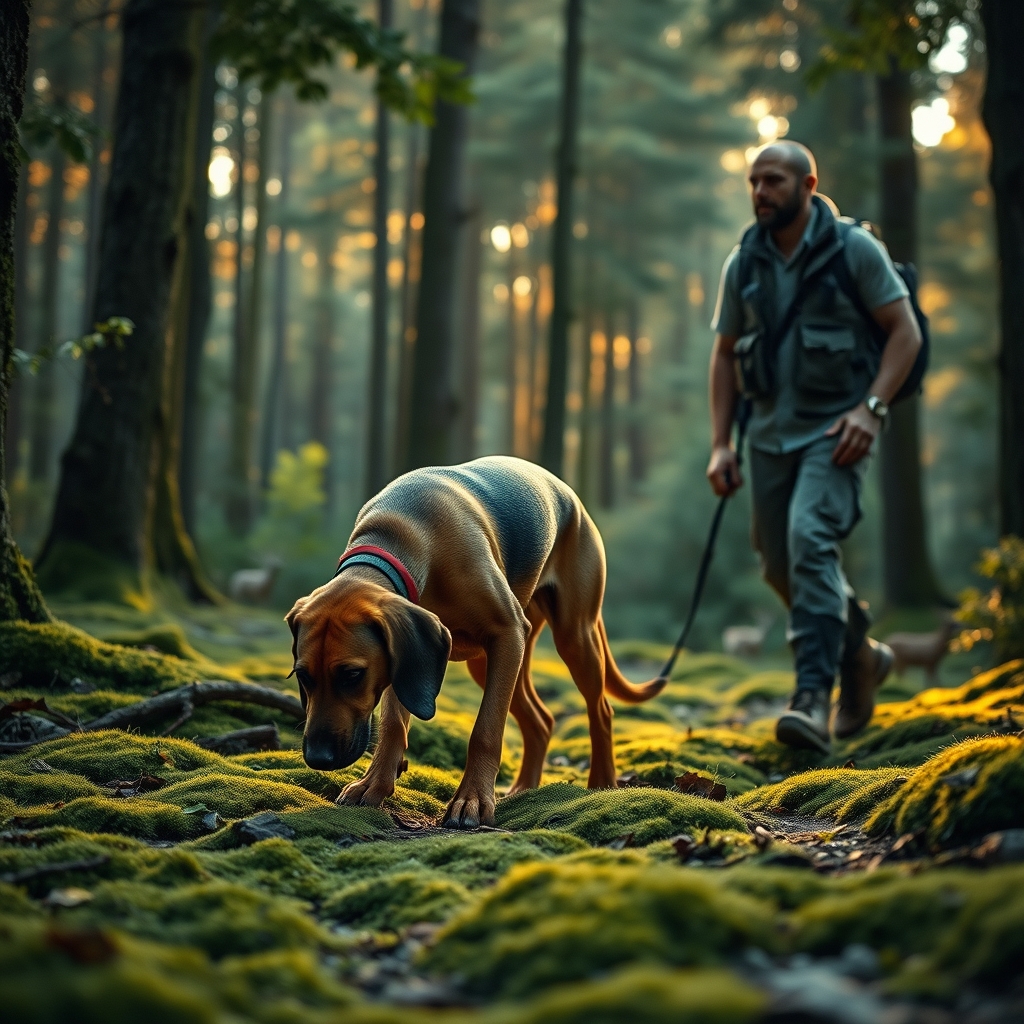
The crisp morning air carries the scent of damp earth and pine as a team of researchers and their canine companions step into the dense forest. Among them, a Bloodhound named Atlas moves with purpose, his nose close to the ground, tail wagging in quiet excitement. He isn’t here for a leisurely walk—he’s on a mission, one that could mean the difference between survival and extinction for some of the world’s most vulnerable species. Tracking dogs like Atlas are emerging as unlikely heroes in the fight to protect wildlife, blending ancient instincts with cutting-edge conservation science.
The Nose Knows: The Science Behind Scent Tracking
A dog’s sense of smell is nothing short of extraordinary. While humans possess around 5 to 6 million olfactory receptors, a Bloodhound like Atlas boasts an astonishing 300 million. This biological marvel allows them to detect scents at concentrations nearly 100 million times lower than what humans can perceive. For wildlife conservationists, this ability is a game-changer. Whether it’s tracking the faintest trace of an endangered Amur leopard in the Russian taiga or locating the scat of a rare black-footed ferret in the American prairies, these dogs can uncover clues that would otherwise go unnoticed.
But how does this translate into real-world conservation efforts? The process begins with training. Scent hound training is a meticulous art, requiring patience, consistency, and a deep understanding of canine behavior. Dogs are introduced to target scents—often collected from the animals they’ll track—and rewarded for positive identification. Over time, they learn to distinguish between species, even differentiating between individuals within the same species. This precision is invaluable for researchers studying population dynamics, migration patterns, and the spread of disease among wildlife.
From Hunting to Helping: The Evolution of Working Dog Breeds
Many of the breeds now used in conservation have roots in hunting. Bloodhounds, Beagles, and German Shorthaired Pointers were originally bred to track game, their instincts honed over centuries to serve human hunters. Yet, as attitudes toward wildlife have shifted, so too has the role of these remarkable animals. Today, they are more likely to be found working alongside biologists than hunters, their skills repurposed to protect rather than pursue.
This transition hasn’t been without challenges. Training a dog to track wildlife for conservation requires a different approach than training one for hunting. The goal is no longer to locate and retrieve but to gather data without disturbing the animals or their habitats. Handlers must teach their dogs to work quietly, to avoid chasing or barking at their quarry, and to remain focused even in the face of distractions like other wildlife or unfamiliar terrain. It’s a delicate balance, one that demands trust and communication between dog and handler.
On the Front Lines: Tracking Dogs in Action
In the rugged mountains of Montana, a team of conservationists and their dogs are on the trail of grizzly bears. The goal isn’t to find the bears themselves but to collect hair samples from rub trees—trees where bears scratch themselves, leaving behind traces of fur. These samples provide DNA data that helps researchers monitor bear populations, track genetic diversity, and identify individual animals. Without the dogs, this work would be far more labor-intensive, relying on human observers to spot and collect samples—a nearly impossible task in vast, remote wilderness areas.
Halfway across the world, in the dense jungles of Sumatra, another team of tracking dogs is working to protect one of the planet’s most iconic yet endangered species: the Sumatran tiger. Poaching and habitat loss have pushed these majestic cats to the brink, but conservationists are fighting back with the help of canine noses. The dogs are trained to detect tiger scat, which provides critical information about the animals’ diet, health, and reproductive status. By analyzing this data, researchers can identify hotspots where tigers are most active and prioritize anti-poaching efforts in those areas.
The Human-Canine Bond: A Partnership Built on Trust
The success of these conservation efforts hinges on the bond between handler and dog. This relationship is built on mutual respect, trust, and a shared sense of purpose. Handlers must understand their dogs’ body language, recognizing when they’re onto a scent, when they’re fatigued, or when they’re simply having an off day. In return, the dogs rely on their handlers for guidance, support, and, of course, rewards—whether it’s a favorite toy, a tasty treat, or a hearty scratch behind the ears.
This partnership extends beyond the field. Many conservation dogs live with their handlers, forming deep, personal connections that enhance their effectiveness in the wild. The dogs aren’t just tools; they’re colleagues, companions, and often, beloved family members. This close relationship also ensures that the dogs are well-cared for, with handlers attuned to their physical and emotional needs. After all, a happy, healthy dog is a more effective conservationist.
The Future of Conservation: Technology Meets Tradition
While tracking dogs are an invaluable asset to wildlife conservation, they’re not the only tool in the arsenal. Advances in animal tracking technology—such as GPS collars, camera traps, and drones—are providing researchers with unprecedented insights into the lives of wild animals. Yet, even as technology evolves, the role of dogs remains irreplaceable. There’s no substitute for their ability to detect scents, navigate difficult terrain, and adapt to the unpredictable nature of the wild.
In some cases, technology and canine tracking are being combined to create even more powerful conservation strategies. For example, dogs can be trained to locate animals fitted with GPS collars, helping researchers retrieve the collars once they’ve fallen off. This synergy between old and new methods is opening up new possibilities for conservation, allowing researchers to gather data more efficiently and with less intrusion into the lives of the animals they’re studying.
As the sun dips below the horizon, Atlas and his handler make their way back to camp, the day’s work complete. The data they’ve collected will contribute to a growing body of knowledge about the species they’re studying, knowledge that could one day help pull them back from the brink of extinction. In a world where wildlife faces unprecedented threats, these dogs and their handlers are a beacon of hope, proving that sometimes, the key to saving nature lies in the paws of our oldest friends. Their work reminds us that conservation isn’t just about protecting animals—it’s about preserving the delicate balance of life that sustains us all, and that the bonds we form with other species can be a powerful force for good.